
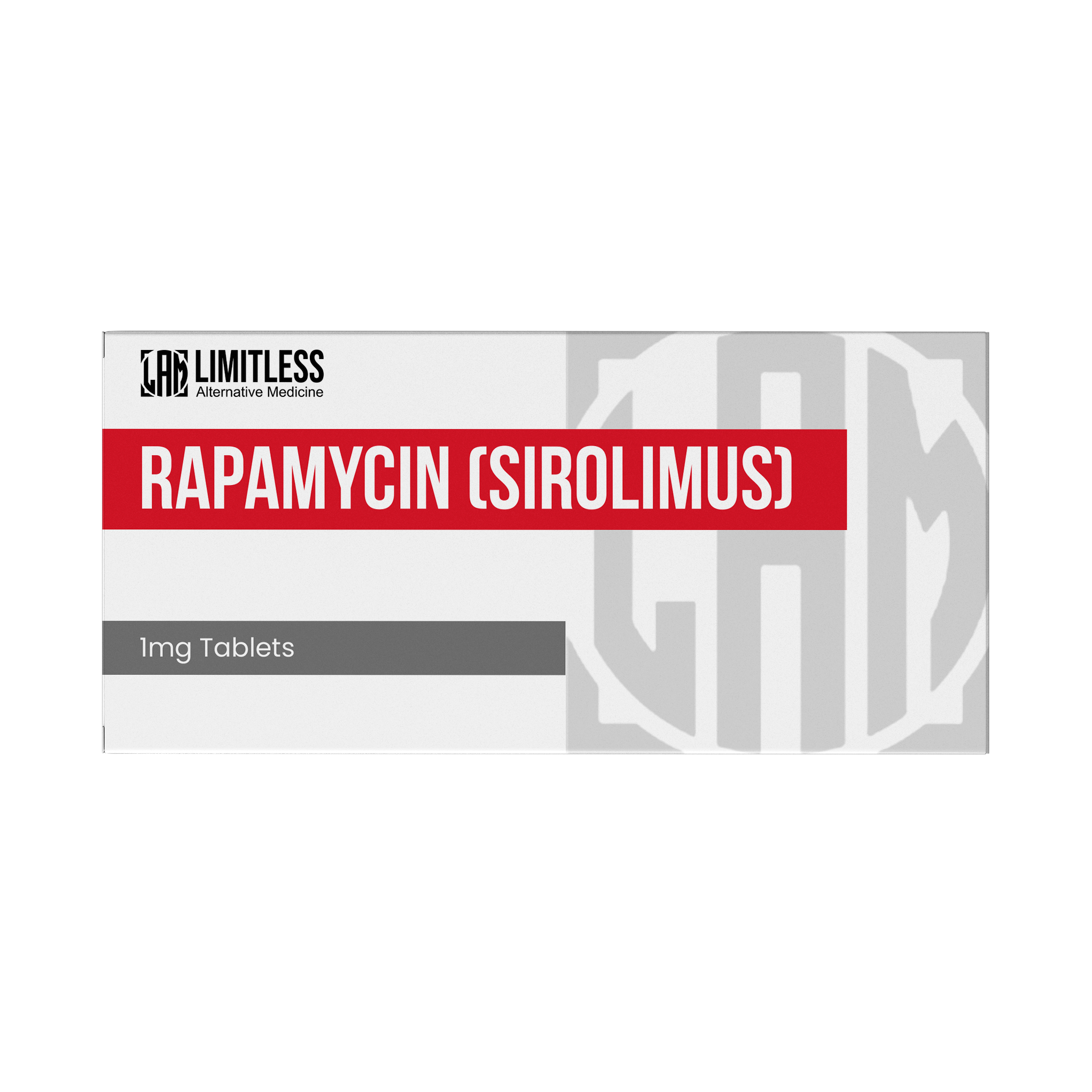
Rapamycin – 30 ct.
Rapamycin (Sirolimus)
$120.00
- Clinician-Guided Protocol
- Informed Pathway Support
- Safety Monitoring
Enhance protocolized mTOR-pathway modulation with clinician-directed therapy prescribed by licensed providers where appropriate. This isn’t guesswork, it’s a supervised sirolimus program for select adults. Join patients who manage personalized goals with reliable medication, structured monitoring, and expert oversight.
- Dispensed by a licensed US pharmacy
- Shipped discreetly to 47 states
- Your provider reviews every order
Structured, clinician-directed mTOR pathway modulation with clear dosing, labs, and risk management, designed to align therapy, monitoring, and your provider’s goals.
About Rapamycin (Sirolimus)
Rapamycin, also known as Sirolimus, is a compound recognized for its role in cellular health, longevity, and immune support. Originally developed as an immunosuppressant, it has gained attention for its potential benefits in slowing aspects of aging and promoting overall wellness. Rapamycin works by inhibiting the mTOR (mechanistic target of rapamycin) pathway, a key regulator of cell growth, metabolism, and aging. By modulating this pathway, it may help reduce cellular stress, improve metabolic balance, and support healthier aging processes at the molecular level. Potential benefits of Rapamycin include enhanced cellular repair, support for longevity, improved metabolic function, and protection against age-related decline. It is also studied for its role in immune system regulation, helping maintain balance and resilience over time.
How it works
HOW RAPAMYCIN WORKS
Rapamycin selectively inhibits mTOR (mechanistic target of rapamycin)—a central nutrient-sensing pathway—thereby modulating cellular signaling and immune activity. Unlike unsupervised use, provider-guided protocols calibrate dose, frequency, and interactions with vigilant monitoring for reliable, safety-first outcomes.
-
Pathway
Targeted mTOR Modulation
Sirolimus interacts with mTOR-dependent signaling; clinicians tailor use to goals, history, and risk profile.
-
Precision
Protocolized Dosing
Structured schedules (e.g., intermittent or weekly) help balance effect and tolerability—set by your provider.
-
Oversight
Lab-Anchored Monitoring
Programs may include CBC, CMP, lipids, renal/hepatic function—and adjustments based on results.
-
Safety
Risk Management
Screening for infections, wound-healing needs, and drug interactions supports safer use in qualified adults.
-
Clarity
Evidence-Informed Guidance
Your provider translates current literature and clinical experience into a practical, personalized plan.
-
Support
Ongoing Check-Ins
Message-based follow-ups keep dosing on track and surface questions early for quick changes when needed.
WHY PATIENTS CHOOSE RAPAMYCIN (SIROLIMUS)
-
01
Protocolized, Evidence-Informed Care
Clinician-guided mTOR modulation with clear dosing and measurable checkpoints.
-
02
Professional Consultation & Monitoring
Personalized schedules, labs when indicated, and responsive follow-ups.
-
03
Research-Grade Medication
USA-made tablets produced to rigorous standards for consistent potency.
If you are seeking a structured, safety-first approach to mtor-pathway modulation, Rapamycin may be appropriate for you. Consult our certified providers to confirm eligibility.
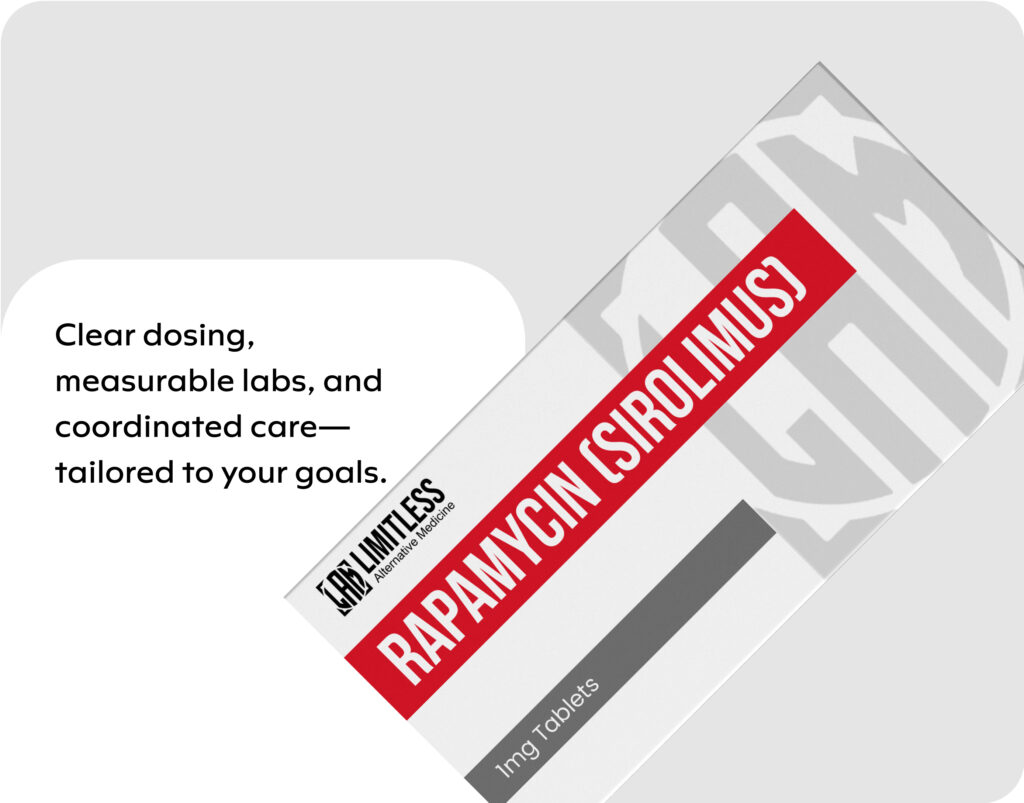
RAPAMYCIN (SIROLIMUS)
A premium, clinician-directed protocol that pairs mTOR-pathway modulation with safety-first monitoring. Built for clarity, accountability, and individualized goals—never for unsupervised use.
- Targeted mTOR inhibition with provider oversight.
- Purity, potency, and consistency verified each batch.
- Clear instructions, interaction review, and ongoing lab-anchored adjustments.
Frequently Asked Questions About RAPAMYCIN (SIROLIMUS)
Find Answers To Commonly Asked Questions About RAPAMYCIN (SIROLIMUS)
Is Rapamycin safe for routine use?
Rapamycin can carry important risks and is not appropriate for many people. Your provider reviews medical history, infection risk, wound-healing needs, current meds, vitals, and labs to determine eligibility and monitoring frequency.
How is dosing typically structured?
Protocols vary (e.g., once-weekly or intermittent). Your clinician individualizes dose and timing, then adjusts based on tolerance, labs, and goals. Never change dosing without guidance.
What labs or monitoring are required?
Programs may include CBC, CMP, fasting lipids, and renal/hepatic panels at baseline and intervals. Additional tests are ordered as clinically indicated to keep therapy safe.
Are there food or drug interactions?
Yes. Sirolimus is metabolized via CYP3A4—strong inhibitors/inducers and grapefruit products may affect levels. Provide a complete medication/supplement list for review.
What should I expect in the first few weeks?
Expect onboarding labs and a conservative start. Report mouth sores, unusual bruising, infections, delayed wound healing, or any concerning symptoms promptly.
Is this pharmaceutical-grade quality?
Yes. Each 1mg tablet is produced to pharmaceutical standards with identity, potency, and consistency testing for reliable dosing.
Who shouldn’t use Rapamycin?
Only your clinician can determine candidacy. Disclose pregnancy status, planned surgeries, active infections, liver or kidney disease, and all medications, including vaccines and recent antibiotic use.
Related products
-
IM Syringes
$0.40 View more info — IM Syringes -
Oral
Pregnenolone 50mg
$2.00 View more info — Pregnenolone 50mg -
Topical
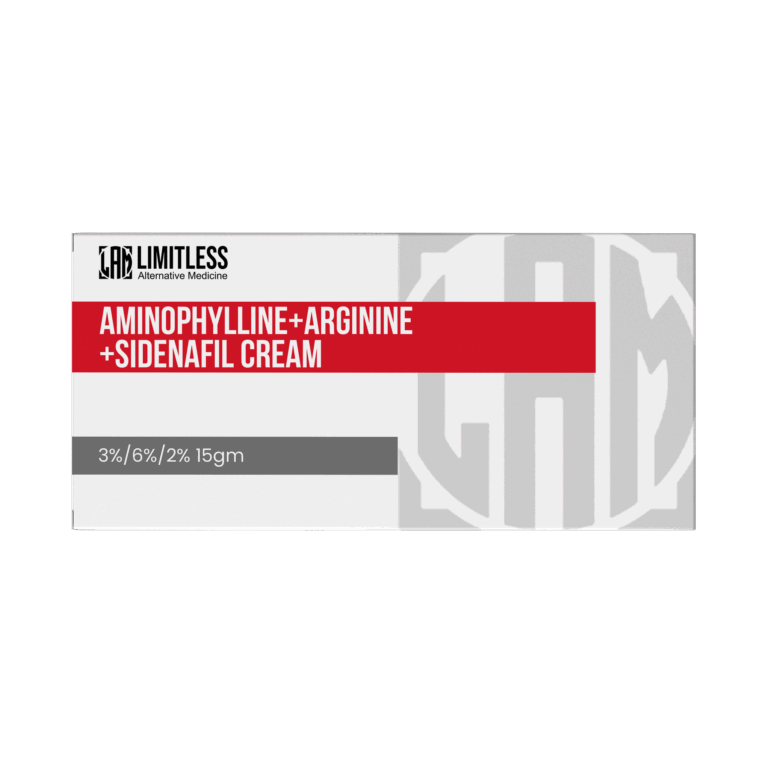
Aminophylline + Arginine + Sildenafil Cream
$100.00 View more info — Aminophylline + Arginine + Sildenafil Cream -
Oral
Metformin HCl 500mg Tablets
$3.50 View more info — Metformin HCl 500mg Tablets