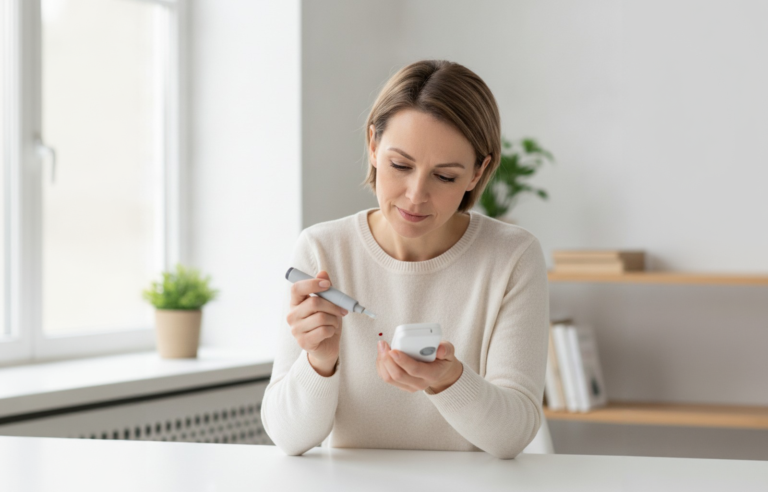
Oral GLP-1 medications now include oral semaglutide products like Rybelsus and the Wegovy pill, as well as Foundayo, which uses a different GLP-1 ingredient called orforglipron. Rybelsus and the Wegovy pill require strict timing instructions: empty stomach, plain water only, then wait before eating. Foundayo skips the food-and-water restrictions entirely.
Introduction
Most people walk into a GLP-1 conversation already braced. They’ve seen the injections, the side effects, the fridge storage, and the prices. By the time they sit down with a provider, they’ve often decided it’s not for them.
What many people don’t realize is that pill options exist now. Some are oral semaglutide, like Rybelsus and the Wegovy pill. Another is Foundayo, which uses a different ingredient called orforglipron. This guide explains what oral GLP-1 medications are, how they work, who does well on them, and what they cost to start.
What Is Oral GLP-1 Medication?
Oral GLP-1 medications include Rybelsus and the Wegovy pill, both containing semaglutide and made by Novo Nordisk. Foundayo contains orforglipron and was developed by Eli Lilly. Orforglipron was originally discovered by Chugai Pharmaceutical and licensed to Lilly.
GLP-1 itself is a hormone your gut produces after meals. It tells your pancreas to release insulin, slows down how fast food leaves your stomach, and signals your brain that you’re full. Semaglutide is a synthetic version that does the same things, just longer and stronger. The result: steadier blood sugar and less appetite. That’s why it works for both type 2 diabetes and weight loss.
The pill problem: Stomach acid normally destroys GLP-1 before it can do anything. Novo Nordisk solved this by combining the drug with an absorption enhancer called SNAC, which buys it just enough time to slip into the bloodstream through the stomach lining. That’s why oral GLP-1 has stricter timing rules than the injection.

How Oral GLP-1 Actually Works
Once absorbed, oral semaglutide does exactly what the injectable version does. It binds to GLP-1 receptors throughout the body and triggers four effects that compound into weight loss and better glucose control.
It boosts insulin release when blood sugar rises, but only when it rises, which is why hypoglycemia is rare. It suppresses glucagon, the hormone that tells your liver to dump stored sugar into the bloodstream. It slows gastric emptying, which keeps you full longer after meals. And it acts on the appetite centers in your hypothalamus. That’s where most patients notice the biggest shift. Food simply takes up less mental real estate.
Dosing Protocol
Start at 3 mg daily for the first 30 days. That’s the tolerance dose. After that, your provider moves you to 7 mg. If 7 mg isn’t producing enough effect after another month, you go to 14 mg, the ceiling for the oral version. The injectable can go higher (up to 2.4 mg weekly for Wegovy), which is the main reason injections still tend to win on raw weight-loss numbers in head-to-head trials.
Analysis published in Frontiers in Endocrinology found that the oral formulation improves treatment acceptance among patients who would have refused injectable therapy outright: patient adherence research.
Why Most Patients Have Never Heard of Oral GLP-1
Three things explain the awareness gap.
Reason One
The injectable versions had a five-year head start in the cultural conversation. Ozempic became a household name before Rybelsus had a marketing budget worth mentioning. By the time the pill arrived, the script was already written: GLP-1 means injection.
Reason Two
Providers prescribe what they’re familiar with. If a doctor has put a hundred patients on weekly injections and seen good results, the daily pill is a harder sell to add to the routine. Not because it’s worse. Because it’s unfamiliar.
Reason Three
Patients don’t ask. They walk in saying “I want Ozempic” or “I want Wegovy,” and the conversation moves forward from there. The oral option doesn’t get raised because nobody raises it.
A peer-reviewed clinical guide on PubMed offers a thorough breakdown of how GLP-1 receptor agonists work across the pancreas, gut, and brain: clinical overview of GLP-1 medications.
Comparing Oral and Injectable GLP-1
Rybelsus, Foundayo, and the injectable versions all hit the same biology. The differences are in delivery, timing, and which routine you’ll actually keep.
Who Should Consider Oral GLP-1?
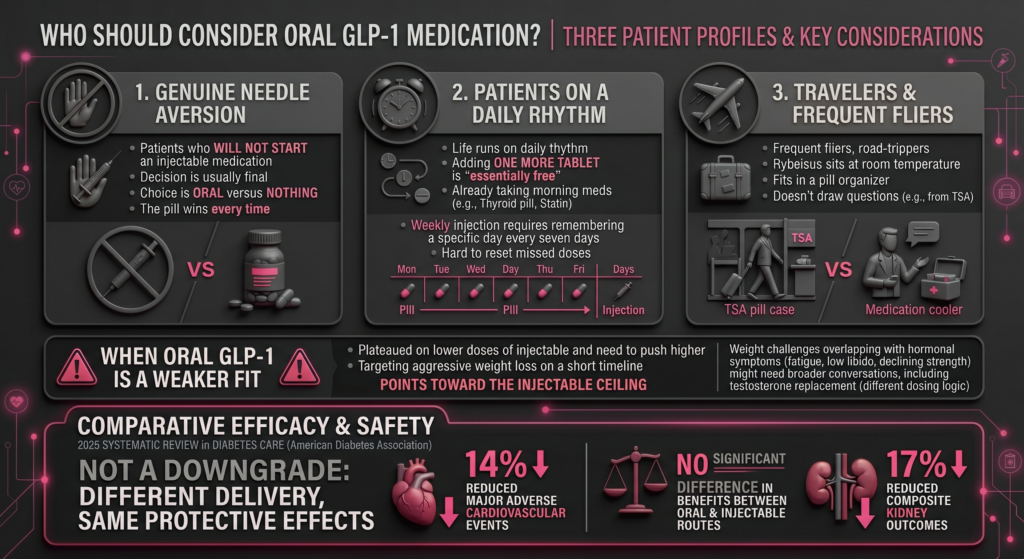
Three patient profiles tend to do well on the pill.
1. The Needle-Averse
A meaningful percentage of patients who would benefit from GLP-1 simply will not start an injectable medication. That decision is usually final. For these patients, the comparison isn’t oral versus injection. It’s oral versus nothing. The pill wins that one every time.
2. The Daily Routine People
If you already take a thyroid pill or a statin every morning, adding one more tablet is essentially free. A weekly injection requires you to remember a specific day every seven days, which sounds easy until you’ve missed one and have to figure out the reset.
3. The Travelers
Frequent fliers, road-trippers, anyone who’d rather not explain a medication cooler to TSA. Rybelsus sits at room temperature, fits in a pill organizer, and doesn’t draw questions.
The pill is a weaker fit if you’ve already plateaued on lower doses of injectable semaglutide and need to push higher, or if you’re targeting aggressive weight loss in a short timeline. Both situations point toward the injectable ceiling. And if your weight challenges overlap with hormonal symptoms like fatigue, low libido, or declining strength, the broader conversation might also include testosterone replacement therapy, where the dosing logic is different.
A 2025 systematic review in Diabetes Care, the journal of the American Diabetes Association, found that GLP-1 receptor agonists reduced major adverse cardiovascular events by 14 percent and composite kidney outcomes by 17 percent. Importantly, the review found no significant difference in those benefits between the oral and injectable routes: long-term safety data on GLP-1 drugs. The pill isn’t a downgrade. It’s a different delivery system for the same protective effects.
Oral GLP-1 Pros and Cons
The Case For
No injections. Room-temperature storage simplifies travel and forgetting your meds at a friend’s house. The daily routine suits people who do better with small consistent habits than weekly ones. Same cardiovascular and kidney protection as the injectable, backed by the same trials. For patients who want flexibility but dislike needles, options like Foundayo add a different oral GLP-1 that can be taken with or without food, no empty-stomach wait.
The Case Against
The timing is unforgiving. Empty stomach, no more than four ounces of water, wait at least 30 minutes before eating. Drink anything else or take other meds, and absorption drops sharply. The 14 mg ceiling caps your maximum effect below what high-dose injectables deliver. Insurance coverage is genuinely worse than for Ozempic in many plans, which often pushes people toward telehealth pricing or cash-pay programs.
If needles are the only thing keeping you from starting, the pill is the answer. If you’re optimizing for maximum weight loss at any cost, the injection probably still wins. Most people aren’t at either extreme.
How To Get Oral GLP-1
The process is straightforward.
Find a Licensed Provider
Primary care works if your doctor is comfortable with these medications. Telehealth clinics that specialize in metabolic and weight management work even better, because the providers see this every day.
Ask for Rybelsus by Name
“Oral semaglutide” also works. But if you don’t say the words, the conversation defaults to injections.
Be Honest About Your Goals
Diabetes, weight loss, both, or just metabolic optimization. The dosing strategy shifts based on the answer.
Run the Pricing Math Early
Insurance coverage for Rybelsus varies wildly. Cash pricing at retail pharmacies runs roughly $900 to $1,000 per month, but Novo Nordisk’s savings card, GoodRx, and telehealth pricing can drop that significantly. Ask before you fill the script, not after.
Read the Timing Rules Twice
Empty stomach. Four ounces of plain water. Wait 30 minutes. Then eat. The medication only works if you take it correctly.
If you’re weighing telehealth against in-person care, our breakdown of how online clinics compare to telemedicine providers covers the practical differences in pricing, follow-up, and prescription handling.
Common Mistakes With Oral GLP-1
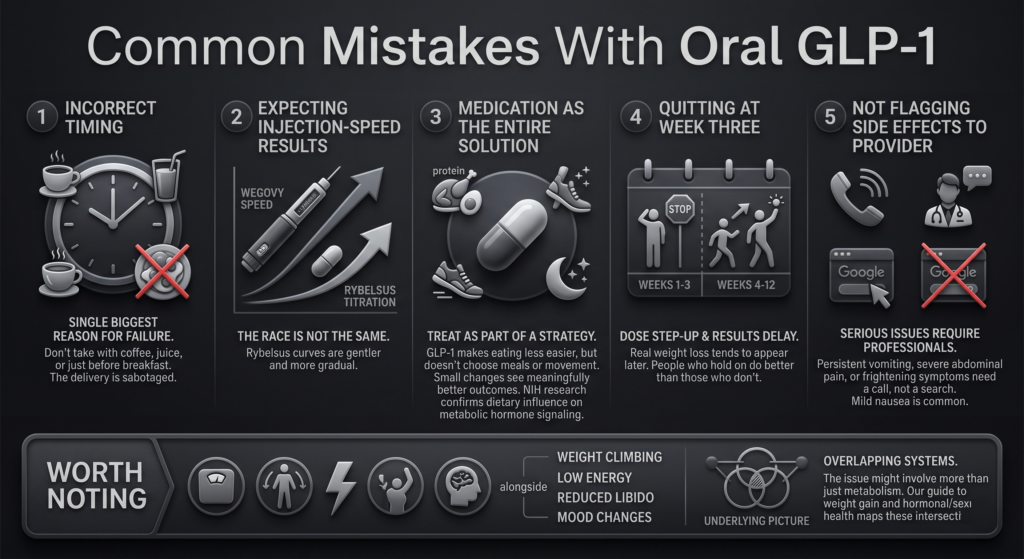
Incorrect timing. The single biggest reason oral GLP-1 fails for people. Patients take it with coffee, or with a glass of juice, or right before breakfast, and then wonder why nothing’s happening. The drug works. The delivery is being sabotaged.
Expecting injection-speed results. Rybelsus titrates more gradually, and the lower dose ceiling means the curve is gentler. If you’re tracking against your friend’s Wegovy timeline, you’ll feel like you’re losing a race. The race is not the same.
Treating the medication as the entire solution. GLP-1 makes eating less feel easier, but it doesn’t choose what you eat or whether you move. Patients who pair the pill with even modest changes (slightly more protein, slightly more walking, slightly more sleep) see meaningfully better outcomes than patients who change nothing. NIH-published research confirms that dietary patterns directly influence the same insulin and metabolic hormone signaling that GLP-1 acts on: dietary strategies for hormone regulation.
Quitting at week three. Real GLP-1 weight loss tends to show up between weeks four and twelve, after the dose has stepped up at least once. People who hold on through the boring middle do better than people who don’t.
Not flagging side effects. Mild nausea is common and usually fades. Persistent vomiting, severe abdominal pain, or anything that scares you is worth a phone call, not a Google search.
If your weight has been climbing alongside symptoms like low energy, reduced libido, or mood changes, the underlying picture might involve more than just metabolism. Our guide to how weight gain impacts hormonal and sexual health maps out how these systems overlap.
Tips To Make Oral GLP-1 Work
Build the Morning Around the Pill
Wake up, take it with a small glass of water, then go shower or walk the dog. By the time you’re done, you can eat. If you try to graft the pill onto an existing breakfast routine, you’ll fail at it within a week.
Eat Real Food When You Eat
Appetite suppression is a tool, not a goal. Patients who use it to skip meals entirely often feel awful, lose muscle, and rebound. Patients who use it for moderate, protein-forward meals at normal times keep the weight off.
Hydrate Aggressively
GLP-1 slows gastric emptying, which can make you feel full of food that isn’t there. Plain water helps. Constipation is a common complaint, and most of it traces back to people drinking less because they don’t feel thirsty.
Sleep Like It Matters
Sleep deprivation raises ghrelin (the hunger hormone) and blunts the satiety signaling that GLP-1 amplifies. Poor sleep is the single most reliable way to make the medication feel like it stopped working.
Track Lightly
Weekly weigh-ins, occasional progress photos, maybe a simple food log if you’re the kind of person who does well with one. Daily weighing is a recipe for emotional whiplash.
The bigger frame: no medication, oral or injectable, replaces the basic infrastructure of feeling good. Sleep, protein, movement, and not catastrophizing every fluctuation. If your expectations are realistic, the pill delivers.
What To Expect: First 30 Days
Week One
Anticlimactic. You take the pill, you wait, you eat, and not much feels different. Maybe a little less hunger between meals. Maybe nothing yet. The 3 mg starter dose is genuinely subtherapeutic. Its only job is to get your stomach used to the medication so the next step up doesn’t make you nauseous.
Week Two
Most people start noticing the shift. Meals feel smaller without conscious effort. The afternoon snack you usually grab without thinking just doesn’t get grabbed. Cravings get quieter, especially for sugar and ultra-processed food. Some patients describe it as the food noise turning down.
Weeks Three and Four
The dose typically steps up to 7 mg, and the effects compound. Modest weight loss usually appears here. Two to four pounds is typical, though it varies. The bigger change is behavioral. You eat slower because you fill up faster. You stop finishing portions. You think about food less between meals.
Day 30 Check-in
The question isn’t “did I lose a lot of weight.” The question is whether the system is working: appetite quieter, eating patterns shifting, routine sticking. If the answer is mostly yes, you’re on track for the bigger changes that show up in months two and three.
Side effects, when they happen, tend to cluster early and fade. Mild nausea is the most common, usually for a few days after each dose increase. A smaller number of patients experience constipation, fatigue, or transient headaches. Severe side effects are rare but real. Persistent vomiting or sharp abdominal pain warrants a same-day call to your provider.
Frequently Asked Questions
How does oral GLP-1 compare to injections?
At 14 mg daily, oral semaglutide produces weight loss and A1C reductions comparable to lower-dose injectable semaglutide. The highest injectable doses still produce more weight loss in trials, but for most patients the gap is smaller than expected, and the cardiovascular and kidney benefits are equivalent.
How much does oral GLP-1 cost?
Cash pricing at retail pharmacies runs roughly $900 to $1,000 per month. Manufacturer savings cards, GoodRx, and telehealth pricing can bring that significantly lower, sometimes to a few hundred dollars monthly depending on the program.
Can I switch from injectable to oral?
Yes. Patients move between formats regularly based on travel, insurance, or preference. Your provider will adjust the dosing schedule to match.
How long until oral GLP-1 starts working?
Appetite changes typically show up in weeks two and three. Measurable weight loss usually starts between weeks four and eight, and accelerates after dose increases.
Do I need a prescription?
Yes. Rybelsus is prescription-only and requires a licensed provider, available through primary care or telehealth.
What are the side effects?
The most common are mild nausea, decreased appetite, occasional constipation, and transient digestive upset. Most fade within the first few weeks as your body adjusts.
Bottom Line
Oral GLP-1 isn’t a worse version of Ozempic. It’s a different delivery system for the same active ingredient, with real tradeoffs in both directions. The pill loses on maximum dose. It wins on accessibility, convenience, and the simple fact that people who would never start an injection will start a pill.
For a meaningful number of patients, that last point is the whole conversation. The best medication is the one you actually take, and for the needle-averse, oral semaglutide is often the only honest answer.
Ready To Start?
Talk To A Provider Who Knows GLP-1
If you’ve been circling GLP-1 from a distance because of the injections, this is worth a real conversation. Limitless physicians prescribe oral and injectable options based on your goals, lifestyle, and metabolic picture.