TL;DR: Telemedicine hormone therapy allows you to manage hormones online through video consultations, lab monitoring, and personalized prescriptions. It’s safe, convenient, flexible for men and women. Regular labs, licensed providers, and consistent follow-up are key to success.
Ever wondered how telemedicine hormone therapy actually works? You’re not the only one. Honestly, managing your hormones from home is becoming super common—and for good reason. No waiting rooms, no traffic, just a video call with a qualified provider who can review labs, prescribe medications, and tweak your plan. Sounds good, right?
Whether it’s testosterone, estrogen, or something else, knowing what to expect can save a lot of stress. This guide walks you through the process, what benefits to expect, and the safety stuff you definitely shouldn’t ignore. By the end, you’ll have a clear idea of whether telemedicine hormone therapy (or “hormone therapy online”) is right for you.
What Telemedicine Hormone Therapy Really Means
Okay, let’s break it down. Telemedicine hormone therapy is basically getting your hormone treatment through online appointments. No office visits, no parking hassles—just you, your provider, and a secure video call.
They’ll go over your symptoms, health history, and lab results. Then they make a plan specifically for you. Simple? Yes. But don’t underestimate it—this is real medical care.
The real benefit here? Convenience without sacrificing safety. Labs are done either locally or via at-home kits. Providers adjust doses based on real data, so you’re not guessing.
Who Can Benefit from Telemedicine Hormone Therapy
You might be thinking, “Okay, but is this for me?” Here’s the truth—almost anyone dealing with hormone issues can benefit, but some groups see the most impact:
Men with low testosterone: Want more energy or better workouts? This could help.
Women managing menopause: Hot flashes, fatigue, or low libido—yes, they can treat that.
Busy folks: If your schedule is hectic, telemedicine saves hours.
Honestly, if you’re okay with using tech for your health, hormone therapy online can work just as well as in-person care (sometimes better, even).
Step-by-Step: How Telemedicine Hormone Therapy Works
Let’s walk through it. I’ll keep it casual because, well, no one wants to read a manual.
1. Initial Consultation
You’ll start with a health questionnaire—think of it like your online check-in. Your provider wants details: symptoms, lifestyle, prior labs.
Then comes the video call. Expect questions about energy, mood, sleep, and sexual health (yes, they ask it all—don’t be embarrassed). This helps them figure out if hormone therapy online is right for you.
2. Lab Testing
Labs are critical. Hormone levels can swing daily, so they usually check:
Testosterone, estrogen, progesterone
Thyroid function
Liver and kidney markers
You can go to a local lab or use at-home kits. The provider reviews the results and plans your treatment. Easy enough.
Now we get into the fun part—your plan. Depending on your results, they might prescribe injections, creams, or pills. Dosages are customized for you and adjusted slowly to avoid side effects.
(Pro tip: starting low and adjusting over time usually works best.)
4. Ongoing Monitoring
Telemedicine isn’t “hands-off,” by the way. Providers schedule check-ins, review labs, and tweak your treatment. You can message about symptoms anytime, which is honestly way easier than scheduling office visits.
Just keep up with appointments—missing them can mess with results.
Common Hormone Therapy Options in Telemedicine
Different needs = different treatments. The main ones include:
Testosterone Therapy
Men often start this for more energy, better workouts, or mood boosts. Labs guide dosing, and progress is tracked online.
Estrogen and Progesterone Therapy
Women going through menopause/perimenopause often use this for hot flashes, low libido, and fatigue. Online adjustments make life simpler.
Bioidentical Hormones
Some prefer hormones identical to what your body naturally makes. Providers can prescribe and monitor these online.
Safety Considerations and What to Watch
Here’s the deal—telemedicine hormone therapy is safe if you follow a few rules:
Labs are non-negotiable: Detects problems early.
Report side effects: Fatigue, mood swings, acne, fluid retention—tell your provider.
Use licensed providers only: Seriously, check credentials.
Medication storage matters: Some need refrigeration.
Some folks assume online care is casual, but it’s really just as thorough as in-person treatment. Maybe even better for some people.
Telemedicine Hormone Therapy vs. In-Person Care
How does online care compare? Here’s the scoop:
Convenience: No commute, flexible schedules, fewer interruptions.
Access: Great for rural patients or anyone with mobility issues.
Privacy: Some people prefer the discretion online care provides.
Heads-up: certain procedures or urgent needs still require office visits. Telemedicine complements in-person care rather than replacing it entirely.
Costs and Insurance Coverage
Costs vary, but telemedicine hormone therapy often saves money overall—less travel, fewer office fees. Some insurance plans cover online hormone treatment; others may not.
Tip: Check coverage for labs, meds, and virtual visits. Some providers offer subscription plans bundling consults, labs, and medication delivery.
Frequently Asked Questions
Q: How quickly does telemedicine hormone therapy work? A: Depends on your levels and treatment. Some feel results in weeks, others months.
Q: Can I switch providers mid-treatment? A: Yes, just make sure your new provider has your full lab history.
Q: Are online prescriptions safe? A: Absolutely, if a licensed provider supervises. Avoid sketchy services that skip labs.
Q: How often are labs required? A: Usually every 3–6 months, depending on your therapy and progress.
Conclusion
Telemedicine hormone therapy makes hormone care easier and more flexible than ever. You get personalized, lab-guided treatment at home, whether it’s testosterone, or menopause support. The catch? Success depends on regular labs, licensed providers, and staying engaged. When you understand how it works and follow best practices, online hormone treatment can be a smart, convenient way to manage your health.
Ready to Take Control of Your Hormones?
Schedule a free consultation with our licensed providers today. Get personalized hormone therapy from home—no waiting rooms, no hassle. Book your virtual appointment now and start feeling like yourself again.
If you’re looking into online TRT, you’re probably asking one simple question: how long does this actually take to work?
Most people who explore online TRT are already tired of feeling tired. Brain fog. Low drive. Bad workouts. Short fuse. You want to know when the switch flips.
Here’s the honest truth: testosterone replacement therapy works in phases. Some effects hit fast. Others take patience. And some depend on how well your protocol is managed. The good news? With properly supervised online TRT, most men notice changes sooner than they expect—if they know what to look for and don’t panic too early.
Let’s break down the real online TRT timeline.
TL;DR – How Long Does Online TRT Take to Work?
Online TRT doesn’t work overnight. But it does work in clear phases.
Most people notice better focus, mood, and sleep within the first 1–2 weeks. By weeks 3–6, energy, libido, and motivation feel more consistent. Physical changes like muscle gain, fat loss, and improved recovery often appear around 2–3 months. Long-term benefits—stable energy, confidence, and better quality of life—build steadily over 6–12 months.
Results depend on dosing, consistency, lifestyle, and provider quality. Done correctly, online TRT isn’t a quick fix. It’s a sustainable way to feel like yourself again.
What Is Online TRT and Why the Timeline Matters
Before we talk timelines, let’s get clear on what online TRT actually is. It’s not sketchy. Not underground. It’s medically supervised testosterone replacement therapy delivered through telemedicine, with labs, licensed providers, and ongoing monitoring.
The timeline matters because testosterone doesn’t work like caffeine. You don’t inject it and suddenly feel invincible. Your body needs time to adjust. Receptors respond at different speeds. Hormones interact. Lifestyle still plays a role—sleep, food, stress, and training all matter.
A common mistake with online TRT is expecting instant transformation. When that doesn’t happen, people quit too early or blame the therapy. Knowing what happens when keeps expectations realistic and results better.
Online TRT Timeline: What You’ll Feel in the First 1–2 Weeks
Let’s be honest—this is the phase everyone cares about. The “is this even doing anything?” stage.
With online TRT, the first one to two weeks usually bring subtle but noticeable shifts. Not superhero stuff. Just…better.
Most men notice improved mental clarity first. Less fog. Better focus. You may wake up feeling more rested. Mood can stabilize. That constant low-level irritability often fades. Libido may flicker back on, even if it’s inconsistent.
Physically, strength gains are rare this early. But workouts may feel smoother. Recovery can improve. Sleep quality often improves before sleep duration does. If nothing changes yet, it doesn’t mean online TRT isn’t working. It means your body is still calibrating.
Between weeks three and six, many men think, “Okay…something’s happening.” Energy becomes more consistent. Motivation improves. Confidence feels steadier—not aggressive, just grounded.
Libido usually increases here. Morning erections often return. Mood swings level out. Anxiety may decrease. Social drive improves. Training feels easier to commit to.
Body composition changes begin subtly. You might notice better muscle pump or mild fat loss. Recovery improves. You don’t feel wrecked after workouts.
This is also when dosing issues show up. Too much testosterone can cause irritability or water retention. Too little can stall progress. One benefit of online TRT is faster feedback and easier adjustments.
Online TRT and Physical Changes: 2–3 Months In
If you stay consistent, months two and three are where online TRT really shines.
Physical changes become visible. Muscle gain feels easier. Fat loss becomes more responsive. Strength improves even without changing your routine.
Therefore, energy stays stable throughout the day. No afternoon crash. Libido feels predictable. Mood improves in ways others notice. You may hear, “You seem different—in a good way.”
Blood markers also begin shifting. Red blood cell count may rise. Lipids can change depending on lifestyle. That’s why labs matter. Responsible online TRT providers monitor markers and adjust early.
This phase rewards patience. People who quit before this often miss the best results..
Mental and Emotional Effects of Online TRT Over Time
Testosterone isn’t just about muscle or sex drive.
Over time, online TRT supports mental clarity and emotional stability. Confidence becomes steady. Decision-making improves. You second-guess yourself less.
Many men report lower anxiety and better stress tolerance. Not numbness—just improved resilience. Motivation becomes internal again. You want to do things without forcing it.
That said, online TRT doesn’t fix everything. If you’re burned out or chronically stressed, testosterone helps—but it isn’t therapy. It amplifies habits. Good habits feel easier. Bad ones hit harder.
Self-awareness matters here. TRT supports momentum. It doesn’t create it.
However, here’s what most blogs skip: online TRT doesn’t work the same for everyone.
Starting testosterone levels matter. Lower levels often lead to faster perceived improvement. Delivery method matters too. Injections, creams, and pellets absorb differently. Injection-based online TRT tends to be more predictable.
Consistency matters. Lifestyle matters even more. Poor sleep blunts results. Bad diet slows progress. Alcohol interferes. Chronic stress raises cortisol, which competes with testosterone.
Provider quality is huge. Cookie-cutter protocols slow results. Personalized dosing speeds them up. That’s why choosing the right online TRT clinic matters long-term.
If you want to avoid trial and error, it’s worth seeing how Limitless Alt Med approaches hormone optimization.
If you’re serious about doing online TRT the right way—and avoiding the trial-and-error mess—it’s worth seeing how Limitless Alt Med approaches hormone optimization.
When Online TRT Doesn’t Work (And What to Do)
Sometimes people say online TRT doesn’t work for them. Most of the time, TRT didn’t fail—something else did.
Common issues include under-dosing, poor absorption, missed injections, or unmanaged estrogen. Sometimes symptoms improve, but expectations were unrealistic. TRT won’t turn you into someone else. It helps you feel like yourself again.
Another issue is time. Quitting at four weeks is like quitting the gym after two workouts. Hormones take time. If you’re six months in with no improvement, that’s different. At that point, labs, dosing, and lifestyle need review.
Good online TRT programs encourage communication. Adjustments aren’t failure. They’re part of the process.
Long-Term Results: What Online TRT Looks Like After 6–12 Months
By six months, online TRT should feel normal—in a good way.
Energy, libido, mood, and strength stabilize. You stop “noticing” TRT because it becomes your baseline. Body composition continues improving if habits stay consistent. Muscle retention improves. Fat gain slows.
At twelve months, many men report better quality of life overall. Work improves. Relationships improve. Training stays consistent.
This is where telemedicine shines. No waiting rooms. No awkward visits. Just data-driven adjustments and steady progress.
Online TRT Works—If You Respect the Timeline
So, how long does online TRT take to work? Faster than most expect—but slower than impatient people want.
Mental clarity and mood often improve within weeks. Libido and energy follow. Physical changes take months. Long-term benefits compound with consistency.
The biggest mistake is quitting early. Online TRT works best when paired with realistic expectations, solid habits, and a provider who listens. It’s not about becoming someone new. It’s about getting back what low testosterone quietly took.
Stay consistent. Stay patient. Done right, online TRT is worth the wait.
For anyone thinking about buying TRT and wants the real story — the stuff guys only talk about after the gym lights go off.
Ever notice how every guy knows someone who’s “on test”?
You’ll be sitting around, maybe after a workout or grabbing dinner, and someone casually drops:
“Yeah, my cousin’s been pinning 500 mg a week and feels amazing.”
But here’s the part they don’t tell you: A few months later, the same guy’s cousin feels like he got hit by a truck, has acne like a teenager, and can’t remember the last time he woke up with morning wood.
I’ve heard this story so many times it should honestly be its own Netflix category. And if you’re reading this, you’ve probably wondered:
“Is TRT actually different from all that?” “Isn’t testosterone just testosterone?” “Why are some guys on TRT thriving while others running cycles look like a rollercoaster?”
So let’s have the honest conversation people rarely have — the difference between modern TRT and traditional testosterone use (cycles, underground stuff, locker-room advice, all of it).
And I promise, this won’t read like a lecture. Let’s talk like friends.
What TRT Actually Is (Not What Instagram Says)
Most guys think TRT is:
“Just taking test so your levels go up.”
But real TRT — the kind you get from a medical clinic that actually checks your labs — is more like giving your body the testosterone it should already have, and keeping things stable.
Modern TRT is:
Prescribed by medical providers
Based on bloodwork (multiple markers, not just total T)
Dosed to keep you in a high-normal range
Aimed at long-term health, energy, libido, mood, body composition
Monitored regularly
Stable, consistent, predictable
There’s no “blast for 12 weeks and hope your body forgives you.”
No guessing your dosage. No mystery vials. No DM-ing a guy named “Big Mike” whose profile picture is him flexing in a garage gym.
TRT is steady. Think cruise control, not drag racing.
What Traditional Testosterone Use Looks Like
(If We’re Being Honest)
Let’s call it what it is:
Underground cycles. Gym-bro dosing. Blast and cruise.
That world is basically fueled by:
High doses
Zero medical supervision
Inconsistent product quality
Hormone rollercoasters
Post-cycle crashes
Google (and hope) as your doctor
Guys don’t talk about the aftermath. And trust me, there is an aftermath.
You can run 500 mg/week of Test E and feel like Superman for 3 months. But the real question is: What happens after those 3 months?
Most guys don’t have a plan. Most guys don’t use proper ancillaries. Most guys don’t know their levels. Most guys don’t PCT correctly (or at all). And most guys end up worse than when they started.
Traditional testosterone use is basically a “short-term boost, long-term tax.”
Why Guys Confuse TRT With Cycles
Honestly? Because on the surface, both involve needles and testosterone. And because social media turned testosterone into a personality trait.
But the actual experience? Night and day.
Picture this:
Traditional cycle:
You feel incredible for 6–10 weeks. Your lifts explode. Your confidence skyrockets. You’re sweating through shirts like you’re sponsored by Gatorade.
Then suddenly: Your libido drops. You feel tired. Your mood tanks. Your natural testosterone shuts down.
And you’re scrambling to find clomid, nolva, — all while hoping your body remembers how to make hormones again.
TRT:
You feel… normal. Not over-the-top. Not manic. Not fried. Just finally like yourself again — every day. You don’t crash. You don’t “cycle off.” Your levels don’t swing like a yo-yo.
It’s sustainable.
The Big Difference: Hormone Stability
This is where people either nod or get confused, so let me break it down like we’re sketching it on a napkin.
Traditional testosterone use = spikes + crashes
You’re blasting supraphysiological levels, then hoping your body recovers.
TRT = stable, healthy levels year-round
You keep yourself in the high-normal range and maintain a predictable baseline.
It’s like the difference between:
Chugging 4 energy drinks → feeling amazing for an hour → crashing vs.
Drinking good coffee every morning → feeling consistently sharp
Your body loves consistency. Your hormones especially.
And for guys who are low T, it’s not about becoming a superhuman — it’s about becoming yourself again.
Side Effects: The Truth No One Warns You About
Traditional Testosterone Use Side Effects:
And I say this from actual stories I’ve heard:
Acne so bad you’re Googling “is this normal?”
Water retention that makes your face look like you lost a boxing match
Mood swings
Rage (yes, it’s real for some guys)
Hair loss
Estrogen spikes that make your nipples sensitive (not in a fun way)
Zero libido after the cycle ends
Balls shrinking
Total shutdown of natural testosterone production
Anxiety during and after
Long-term fertility issues
Blood pressure going up
Thickened blood (hematocrit)
And yes, the guy “at the gym who’s totally fine” is lying about at least half of these.
TRT Side Effects:
Much fewer, much milder, and medically managed:
Mild water retention
Possible rise in hematocrit (monitored and easily addressed)
Changes in estradiol (adjusted by dose or protocol)
The difference is simple:
With traditional use, you manage side effects alone. With TRT, your provider handles them before they become a problem.
Legality & Safety (People Pretend This Doesn’t Matter)
Traditional testosterone (cycles)
Illegal
Unregulated
Often mislabeled
Unknown sterility
Often underdosed or overdosed
Sourced from someone who “knows a guy”
Zero accountability
TRT:
Prescribed
Legal
Pharmaceutical grade
Lab-tested
Dosage is exact
Providers are accountable
Treatment is fully documented
One path is guessing. The other is health care.
The Emotional Side People Never Talk About
You know what guys don’t talk about enough?
The insecurity that pushes them into traditional cycles.
A lot of men start cycles because:
Their friend is doing it
They feel behind in the gym
They’re tired of being tired
They’re embarrassed to admit they want help
They think TRT is “for old men”
They think quick results mean better results
But there’s a hidden cost: When the cycle ends, so does the confidence.
I’ve had guys tell me:
“I felt amazing on cycle, but afterwards I felt like I lost myself.”
This is why medical TRT exists. Not to turn you into a bodybuilder — but to help you feel whole again, consistently.
Why More Guys Are Choosing TRT Instead of Cycles
1. They want to feel good year-round, not only for 8 weeks.
Simplicity wins.
2. They want medical oversight.
Because guessing is exhausting.
3. They want legal, pharmaceutical-grade testosterone.
No more brown vials from mystery sources.
4. They want stable mood, libido, and energy.
Not “up for two months, down for two months.”
5. They realize TRT is the long-term solution.
If you’re low T, cycles won’t fix you — they’ll break you further.
6. They want to stop worrying about crashes.
TRT eliminates the post-cycle blues that ruin guys mentally and physically.
Health Markers: This Is Where TRT Wins Every Time
Medical TRT doesn’t just give you testosterone. It gives you data.
You’re monitoring:
Testosterone (total & free)
Estradiol
SHBG
Hematocrit
Lipids
Liver enzymes
PSA
Thyroid markers (in many cases)
You actually know what’s happening in your body.
With traditional testosterone?
You’re monitoring:
Your gym pump
Maybe your mood
Maybe your nipples
And your friend’s advice who “ran this cycle last year”
This is a massive difference.
Who Should Choose TRT (Honestly)?
If you’re reading this and thinking:
“I’m tired of feeling tired.”
“My libido isn’t what it used to be.”
“My energy and focus feel off.”
“I feel like half the man I used to be.”
“I always crash after cycles.”
“I want consistency, not chaos.”
Then TRT is likely the better path.
TRT is for guys who want:
Long-term vitality
Stable hormones
Predictable, healthy improvements
Clear mental focus
Consistent energy
Better mood and sleep
Normal, healthy libido
Sustainable progress in the gym
It’s about longevity. Quality of life. Feeling like a man again — without destroying your hormones in the process.
This isn’t creatine. It isn’t pre-workout. It isn’t fish oil.
Traditional cycles treat testosterone like a supplement. TRT treats testosterone like a vital component of your health.
One approach is reactionary. The other is responsible.
The Real Point: You Deserve to Feel Like Yourself Again
If this whole article hits close to home — the fatigue, the mood drops, the slow mornings, the loss of drive — that’s not a sign of weakness.
It’s a sign your hormones might need support.
And once you’ve lived with low T long enough, you start to forget what “normal” even feels like.
Imagine waking up with energy again. Imagine wanting sex again. Imagine not dragging through the day. Imagine having patience, clarity, confidence. Imagine being steady instead of irritable.
That’s what TRT gives men when it’s done right.
Ready to Feel Like Yourself Again?
If you’re seriously thinking about TRT — not cycles, not guesswork — you owe it to yourself to work with a legit provider who actually monitors your health.
Most guys wait years. You don’t have to.
Start TRT with Limitless Alt Med — and get 5% off your first order.
They’ll walk you through the entire process, handle your labs, dial in your dose, and help you feel like yourself again — consistently.
Medical Disclaimer: This blog post and the entire limitlessaltmed.com website are for informational and educational purposes only and are not a substitute for professional medical advice, diagnosis, or treatment.
Now you’re standing at a fork in the road with two signs:
TRT
Enclomiphene
Both promise to help. Both speak in the calm, confident tone of modern medicine. But they are not the same thing, and the difference matters.
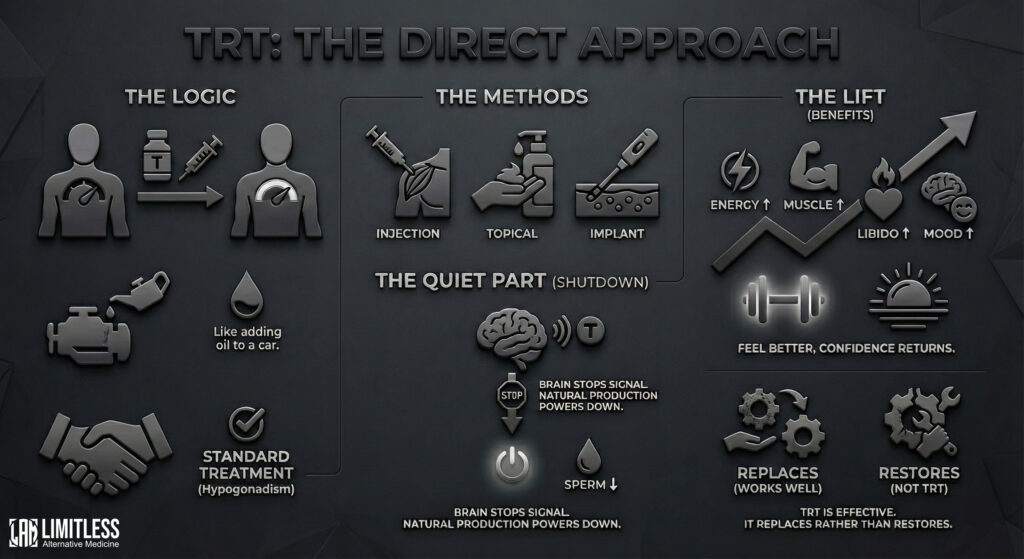
TRT: The Direct Approach
Testosterone Replacement Therapy, or TRT, is straightforward. Your body isn’t making enough testosterone, so you add some from the outside.
It’s clean logic. Like if your car is low on oil, you add oil.
Organizations like the American Urological Associationand the Endocrine Society recognize TRT as a standard treatment for men diagnosed with hypogonadism. The Mayo Clinicexplains it plainly: TRT can improve energy, muscle mass, libido, and mood in men whose levels are genuinely low.
You inject it. Or rub it on. Or have pellets inserted under your skin.
And often, fairly quickly, you feel better.
There’s a lift. A sharpening. You look at the barbell and it looks back at you with less hostility. You wake up in the morning with something resembling the old confidence.
But here’s the quiet part.
When you bring testosterone in from the outside, your brain takes the hint. “Ah,” it says. “We’re good here.” And it stops telling your testicles to produce their own. Natural production shuts down. Sperm production drops. Testicles may shrink.
The system powers down because it assumes its job is done.
TRT works. It works well. But it replaces rather than restores.
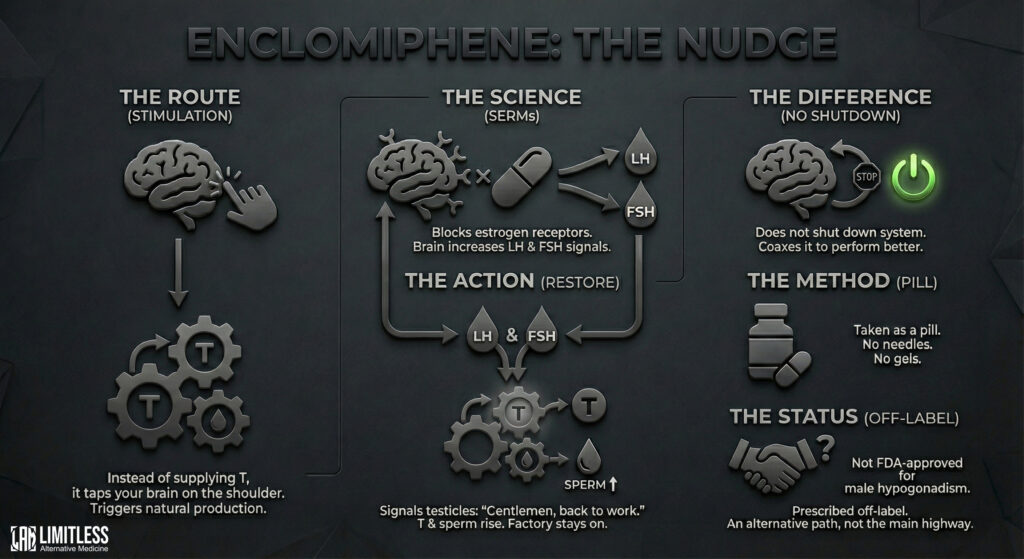
Enclomiphene takes a different route. Instead of supplying testosterone, it taps your brain on the shoulder.
It belongs to a class of drugs called SERMs. According to research reviewed by the National Institutes of Health, it blocks certain estrogen receptors in the brain. The brain, thinking estrogen activity is low, increases luteinizing hormone and follicle-stimulating hormone.
Those hormones go to your testicles and say, in effect, “Gentlemen, back to work.”
Testosterone rises. Sperm production rises. The factory lights stay on.
Unlike TRT, enclomiphene does not shut down your system. It tries to coax it into performing better.
It’s taken as a pill. No needles. No gels.
It is not FDA-approved specifically for male hypogonadism, so it’s prescribed off-label. That fact doesn’t make it unsafe, but it does mean you’re stepping slightly outside the main highway of standard protocol.
Enclomiphene vs TRT: The Key Differences
Here’s where most guys start to get clarity — once you see them side by side.
Feature
TRT
Enclomiphene
Mechanism
Replaces testosterone directly
Stimulates natural testosterone production
Fertility
Often decreases sperm count
Preserves or improves sperm production
Delivery
Injections, gels, pellets
Oral capsule
Maintenance
Ongoing, lifelong in many cases
Can be cycled or used short-term
Lab Monitoring
Required for safety
Also required, but typically less intensive
Natural Feel
Strong and immediate
Gradual, more balanced
Shutdown Risk
High (your body stops producing T)
Low
Cost
Moderate to high
Usually lower
Convenience
Injections or office visits
Simple daily pill
In short: TRT delivers fast, powerful results — but at the cost of dependency. Enclomiphene takes the slower route, coaxing your body to handle things on its own.
The Fertility Question
If you want children, TRT complicates the story. Because it suppresses sperm production, many men on TRT become infertile unless additional medications are added.
Studies indexed in PubMed show that enclomiphene can increase testosterone while preserving or even increasing sperm counts.
So if you’re thirty-five, or forty, or even forty-five, and not entirely sure your family is complete, this detail lands differently.
Speed vs. Patience
TRT tends to work fast. Some men notice changes within a week or two. Energy improves. Libido returns. The fog thins.
Enclomiphene is slower. Four to six weeks is common before the full effects show up. Because it relies on your own hormonal machinery, it takes time.
This becomes a temperament question.
Do you want the immediate correction? Or are you willing to wait while your body recalibrates?
There is no moral high ground here. Just preference.
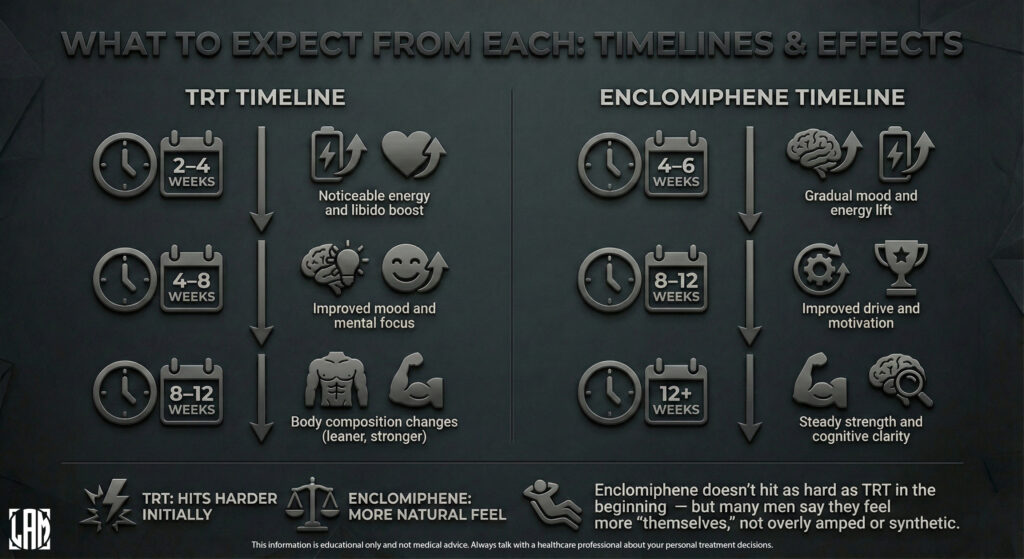
What to Expect from Each
TRT timeline:
2–4 weeks: noticeable energy and libido boost
4–8 weeks: improved mood and mental focus
8–12 weeks: body composition changes (leaner, stronger)
Enclomiphene timeline:
4–6 weeks: gradual mood and energy lift
8–12 weeks: improved drive and motivation
12+ weeks: steady strength and cognitive clarity
Enclomiphene doesn’t hit as hard as TRT in the beginning — but many men say they feel more “themselves,” not overly amped or synthetic.
Commitment
Once you start TRT, your natural production is suppressed. If you stop abruptly, your testosterone can drop hard before your body recovers, and recovery can take months.
With enclomiphene, because natural production remains active, stopping the medication usually returns you to baseline rather than dropping you into a hormonal basement.
So the question becomes: are you comfortable stepping onto something that may be long term?
For some men, the answer is yes. Relief is worth it. For others, the idea of lifelong external hormone replacement feels heavy.
Side Effects: The Tradeoffs
TRT can increase red blood cell count, worsen sleep apnea, cause acne, hair loss, or gynecomastia. Monitoring is necessary. Blood work is not optional.
Enclomiphene can cause headaches, mood shifts, nausea, joint discomfort. Because it modifies estrogen signaling in the brain, some men report emotional changes or visual disturbances.
Neither option is magic. Both require supervision. Both involve tradeoffs.
A More Human Way to Think About It
This isn’t really a biochemical decision. Not only that.
It’s about identity.
Do you see yourself as someone who replaces what’s missing? Or someone who tries to restore what’s still there?
TRT says, “We will supply what you lack.” Enclomiphene says, “Let’s see if your body can rise to the occasion.”
Both can be right.
The real mistake is choosing without understanding what you’re signing up for. Or chasing numbers on a lab report without thinking about the larger arc of your life. Kids. Marriage. Health at sixty-five. Energy at seventy.
Low testosterone feels urgent. And in many ways, it is. But urgency is not the same as clarity.
Get thorough labs. Talk to a physician who treats hormones seriously. Ask about fertility, about long-term plans and what happens if you stop.
Then choose.Not the option that sounds strongest. Not the one that promises the fastest glow. But the one that fits the man you are trying to become.
At Limitless Alternative Medicine, we specialize in hormone optimization and peptide therapy , with pure, research-backed ingredients.
Our three-part process boosts strength, metabolism, and stamina for peak results.
We offer free consultations and community support for a holistic path.
Medical Disclaimer: This blog post and the entire limitlessaltmed.com website are for informational and educational purposes only and are not a substitute for professional medical advice, diagnosis, or treatment.
6 Lifestyle Adjustments To Enhance The Effectiveness Of Your TRT
If a guy has low testosterone, testosterone replacement therapy (TRT) might make a big difference. While TRT can help improve your happiness, energy, and overall quality of life, it can work even better if you change how you live. Making these changes is very important because they can improve your body’s response to TRT, ensuring you get the most out of the treatment.
We’ll talk about some significant changes you can make to your life that will help your TRT work better and be better for your health in the long run.
Planning Your Diet So That It Works Best For You
Anyone receiving transdermal radiation therapy should follow a balanced, healthful diet. Your body needs enough nutrients, vitamins, and minerals to absorb testosterone properly and keep hormone levels at the right amount.
You should eat less sugar and processed carbs after TRT if you want the benefits to last. If you overeat either, you can gain weight and stop responding to insulin. Increase your intake of whole grains and meals high in fiber to maintain a stable blood sugar level.
Go Ahead And Do Your Strength Training And Workouts First
Regular exercise is important to get the most out of TRT because it changes how your body uses testosterone. To get the most out of total body resistance exercise (TRT), you should work on getting stronger, losing fat, and getting more energy.
Get A Good Night’s Sleep To Keep Your Hormone Levels Healthy.
A big part of staying healthy is getting enough sleep. This is especially true for hormones. Your body heals damaged tissues, restores hormonal balance (including testosterone), and prepares for the next day while you sleep. Not getting enough sleep can cause tiredness, low testosterone levels, and TRT that doesn’t work.
Stay Away From Stress
Stress that lasts for a long time can lower your testosterone levels. Cortisol is a stress hormone that might stop the production of testosterone. If you have high cortisol levels, you might gain weight, have mood swings, and have a lower libido, all of which could cancel out the sound effects of TRT.
Stay Away From The Extra Weight!
For TRT to work best, you need to stay at a healthy weight. Extra body fat, especially around the stomach, can make reproductive problems worse because it raises estrogen levels and lowers testosterone levels.
Even though losing weight is generally good, the real goal should be to get rid of body fat, especially abdominal fat. Increase your intake of whole grains and meals high in fiber to maintain a stable blood sugar level.
Some people on TRT may also think about peptide treatment as a way to lose weight, along with more common methods. People can use peptide treatment and TRT to improve their health and body composition. Peptides are used in this treatment to help build muscle and eliminate fat. When you combine TRT with other healthy treatments and ways of living, like Peptide therapy for weight loss, the results will be better and last longer.
Cut Down On Smoking And Drinking
Alcohol and tobacco users typically have lower testosterone levels and have less success with testosterone replacement therapy. Some people don’t think drinking too much alcohol is bad for them, but drinking too much could lower your testosterone levels, hurt your body, and make you gain weight.
Cut back on alcohol to moderate amounts (no more than one or two drinks a day) to protect your liver health and testosterone levels.
Giving up tobacco: When you smoke, your testosterone levels drop, your circulation gets worse, and your risk of heart disease goes up. In addition to making your health better in general, giving up smoking can makeTRT work better and lower your risk of getting other health problems.
Conclusion
While testosterone replacement therapy (TRT) can raise testosterone levels and ease the signs of low testosterone, making some changes to how you act can make the treatment even more effective. For best results with TRT and to keep it up for a long time, you should eat well, work out daily, deal with stress, get enough sleep, and keep the weight off. Therapies like peptide treatment for weight loss also help you lose even more fat by changing how your body looks and making you lose fat.
These changes should be at the top of your list if you want to get the most out of your TRT and improve your health in general.
Many men, as they age, feel like they’ve lost their edge. Low energy, mood swings, irritability, low sex drive, and decreased productivity are their common symptoms. It happens due to low testosterone levels.
Out of many ways to boost testosterone levels, Testosterone Replacement Therapy (TRT) is the most revolutionary one.
Not many people know about this therapy. Therefore, we’re sharing the information with you through this article.
The role of testosterone in men’s life
One major male sex hormone that affects men’s health is testosterone. Some people connect it with bulging biceps and a deep voice. However, it’s not limited to that only.
It’s the hormone that influences everything from bone density and muscle mass to mood regulation and cognitive function. Men’s testosterone levels gradually decrease with age, resulting in a variety of symptoms.
Signs of low testosterone
These are the common signs of low testosterone levels:
Fatigue and low energy
Decreased muscle mass and strength
High body fat, especially around the belly
Mood changes, irritability and depression
Reduced libido and erectile dysfunction
Difficulty in concentrating and memory issues
Lower bone density
If you’re currently experiencing some or all of these symptoms, it might be time to consult a healthcare professional about your testosterone levels.
Testosterone Replacement Therapy (TRT) as a solution
With TRT, your body’s natural testosterone production level comes back within a healthy range.
TRT is not about making you a superhuman but rather restoring balance to improve your overall well-being.
Improving the quality of life with TRT
TRT improves the following to improve the quality of life for men:
Energy and vitality
One of the most immediate and noticeable effects of TRT is increased energy. Many men report feeling more awake, alert, and ready to tackle their day. This boost in vitality can have a ripple effect, which improves performance at work, enhancing social interactions and reigniting passion for hobbies and activities.
Body composition
TRT can work wonders for body composition. It helps burn fat throughout the body, especially that stubborn belly fat, and increases lean muscle mass. Not only do you look good, but you also feel good and reduce the risk of obesity-related health issues.
Mood and mental health benefits
Testosterone has a major role to play in mood regulation. Men undergoing TRT often report improved mood, reduced irritability, and a decrease in depressive symptoms.
Good mood and mental health form better relationships, more productivity, and an overall more positive outlook on life.
Cognitive functions
Brain fog is gone. It has been demonstrated that TRT enhances cognitive abilities such as memory, concentration, and spatial awareness. It is particularly beneficial for men in demanding careers or those pursuing educational goals.
Sexual function
TRT is helpful in improving libido and erectile function. This gives a better sexual experience and higher intimacy in relationships.
Bone density
Osteoporosis isn’t just a women’s health issue. Men with low testosterone are at higher risk for decreased bone density. TRT helps maintain and even increase bone density.
Cardiovascular health
Some studies indicate that TRT may have cardiovascular benefits, including elevated cholesterol levels and a decreased risk of heart disease in men with low testosterone, though additional research is required.
Sleep Quality
Low testosterone levels cause sleep problems. Many men face problems like insomnia and sleep apnea due to this. TRT, no doubt, improves sleep quality which provides deeper rest and fast recovery.
Taking a holistic approach
TRT is a transformative solution, but what if you view it as a part of a holistic approach to health?
Combine TRT with lifestyle modification to amplify its benefits:
Regular exercise, particularly strength training
A balanced, nutrient-rich diet
Stress management techniques
Adequate sleep
Limiting alcohol consumption
Other therapies can complement TRT in improving overall health. For example, you takepeptide therapy for weight loss to support body composition goals alongside TRT.
Conclusion
TRT has the potential to significantly improve the lives of men whose low testosterone levels are affecting them. From rekindling energy and vitality to improving body composition, mental health, and sexual function, the benefits of TRT touch on nearly every aspect of a man’s life.
However, keep your expectations realistic and approach TRT under the guidance of a qualified professional.
It’s not a magic bullet, but rather a tool that, when used correctly and in conjunction with a healthy lifestyle, can bring transformative changes in your life.
Ever wonder why sportsmen and bodybuilders can create such enormous muscles and are so strong? Although a good diet and regular exercise are rather vital, testosterone is also quite crucial. This strong hormone affects overall muscular strength, healing speed, and growth of muscles in particular. Understanding the function of testosterone in muscle development will enable us to explain why some individuals may have more difficulty than others growing muscle, as well as how our bodies become stronger and remain strong. Today, we will go more into testosterone’s effects on strength and development.
What Exactly Is Testosterone?
Mostly found in men’s testes, testosterone is a steroid hormone found in very minor levels in women’s ovaries. Many physical processes, including the formation of body hair, muscle and bone mass, and the development of male sexual organs, depend critically on it. Though most people see testosterone as a masculine attribute, women notably need it to maintain their muscular mass and bone strength.
How do Muscles Develop And Expand?
Muscular development under which strength exercise damages the muscular fibers is known as hypertrophy. Starting a healing process, satellite cells—stem cells—become active, proliferate, and link to the damaged muscle fibers. This results in stronger and larger muscles. Testosterone increases this process’s speed by:
Protein Synthesis:
Testosterone accelerates the synthesis of proteins, vital building blocks for muscle formation, by the body.
Halting The Protein Breakdown:
It slows down the degradation of muscle proteins, therefore allowing more proteins to accumulate in muscle tissue.
Getting Satellite Cells In Action:
Testosterone increases the quantity and activity of satellite cells, therefore supporting muscle development and healing.
Getting The Growth Hormone Working More Effectively:
It increases the production of growth hormones, which aids in muscle building and even greater burning of fat.
Testosterone Levels And Body Mass
Increased testosterone directly relates to higher muscular development and strength. This is the reason males often have higher muscular mass than women. A decrease in muscular size and strength, known as sarcopenia, results from typically declining testosterone levels as one age. Knowing this decline helps one to develop strategies to maintain the muscles of elderly persons in good condition.
What Is Peptide Therapy For?
Peptide therapy for weight loss may help the body burn fat, develop muscle, and alter overall appearance by means of simpler burning of calories. Together with sufficient testosterone, the benefits on muscular development and strength might be really significant. Finding the correct peptides and ensuring their safe and efficient usage depend on speaking with a doctor.
Testosterone Replacement Treatment, Or Trt
Those with clinically low testosterone levels could be advised testosterone replacement therapy (TRT). TRT delivers testosterone either via injections, creams, patches, or tablets to bring levels back to normal. Although TRT may significantly increase your muscle growth, strength, and quality of life, you should exercise great caution and only use it under medical advice since it has hazards and negative effects.
What Food Increases Testosterone And Muscle Building?
Maintaining high testosterone levels and developing muscle depend much on nutrition. Here are some meal ideas for contemplation:
How Much Protein?
Building and mending muscles depend on adequate protein. Select lean sources such fish, eggs, poultry, turkey, and plant-based meals including lentils and beans.
Good Fats:
Eat avocados, olive oil, nuts, seeds, and other healthy fats. Making hormones requires theselipids.
Carbohydrates And Sugars:
Carbohydrates provide the fuel you need to work out intensely. For carbohydrates, choose fruits, vegetables, and healthy grains.
Micronutrients Are:
Especially magnesium, zinc, and vitamin D—all associated to producing testosterone—make sure you receive adequate minerals and vitamins.
Working Out And Testosterone
Working out is among the finest approaches to increase testosterone levels. High-intensity interval training (HIIT) and strength training both have been demonstrated to significantly enhance testosterone levels. Combining challenging activities such squats, deadlifts, bench presses, and runs can help your body produce more testosterone and develop muscles.
Break Off And Heal
While diet and exercise are vital, so are proper sleep and healing time. When you overtrain, high levels of cortisol might result from which your body loses testosterone production. Get adequate sleep, allow your muscles time to repair, and schedule rest days to help you avoid stress and maintain the balance of hormones.
Monitoring Testosterone Levels And Modifying Them
Regular testosterone testing may help identify issues early on so they may be promptly corrected. Blood tests provide both total and free testosterone levels, therefore offering a whole picture of endocrine condition. Working with a healthcare professional to correct any imbalances by means of adjustments in lifestyle, diet, or medical treatments helps one to maximize muscular mass and overall health.
Conclusion
All things considered, testosterone is a rather crucial hormone for increasing muscular mass and strength. Muscle development and overall health, in general, will be much better if one understands how it works and how to maintain levels at their greatest via diet, exercise, lifestyle choices, and maybe even medical treatments like Peptide therapy for weight loss. If you remain fit and healthy, or if you are an athlete striving for improvement, you should monitor your testosterone levels. Following these guidelines will help you to get on your journey to meet your muscular and strength objectives.
If you’re over 45 and have been feeling off lately:
You might have low testosterone.
About 4 to 5 million men in the United States do.
Only about 5% of them are getting treatment for it. Which means there are a lot of guys out there running on fumes, thinking this is just what getting older feels like, when in fact there’s a well-studied, medically supervised treatment that could help.
What Is TRT (and Who Is It For)?
Let’s be clear TRT is not steroids for guys who want bigger arms. It’s not simply a performance enhancer.
What it is: a medically supervised treatment that restores your testosterone to normal levels when your body has stopped producing enough on its own. Think of it less like upgrading your engine and more like putting the correct grade of oil back in it. Your car was designed to run on this stuff. Without it, things get clunky.
Clinically, your doctor will consider TRT when your total testosterone consistently falls below 300 ng/dL, the threshold recognized by the American Urological Association and the Endocrine Society, and you’re experiencing symptoms that genuinely affect your quality of life. Both pieces matter. A low number without symptoms, or symptoms without a low number, typically won’t (and shouldn’t) result in a prescription.
Signs of Low Testosterone
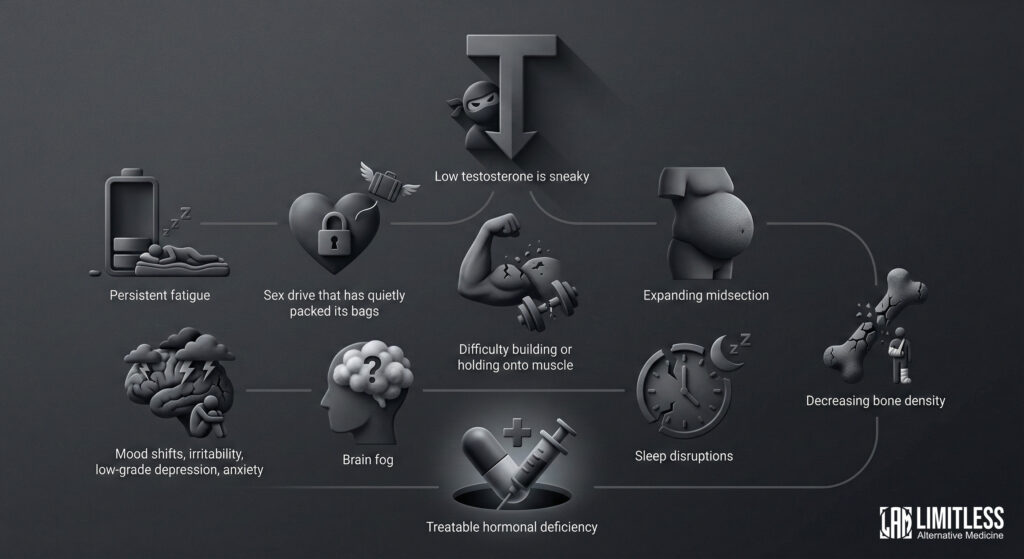
Low testosterone is sneaky. It doesn’t arrive with a banner and a trumpet. It shows up gradually, like a guest who keeps dimming the lights at your party until suddenly you’re all sitting in the dark wondering what happened to the vibe.
The most common signs include:
Persistent fatigue that doesn’t improve no matter how much you rest
A sex drive that has quietly packed its bags
Difficulty building or holding onto muscle
An expanding midsection that seems to have its own agenda
Mood shifts, irritability, or a low-grade depression that wasn’t there before
Brain fog — thinking through wet cotton
Sleep disruptions
Decreasing bone density
A lot of men chalk this up to stress, or age, or the general condition of being alive in the modern era. And sometimes those things are the cause. But sometimes they’re masking a hormonal deficiency that’s entirely treatable. The only way to know is to get tested.
Your testosterone peaks sometime in your late teens to early twenties—back when you had opinions about everything and the energy to argue about them—and then declines about 1% per year after 30. Here’s a rough reference range for total testosterone:
Age Range
Typical Total Testosterone (ng/dL)
18–25
400–700
26–35
350–650
36–45
300–600
46–55
250–550
55+
200–500
These ranges vary by lab. What matters clinically is where your number sits relative to how you feel. A guy at 310 with zero symptoms is in a very different situation than a guy at 310 who can barely get through his afternoon without a nap and a small existential crisis.
What Causes Low Testosterone?
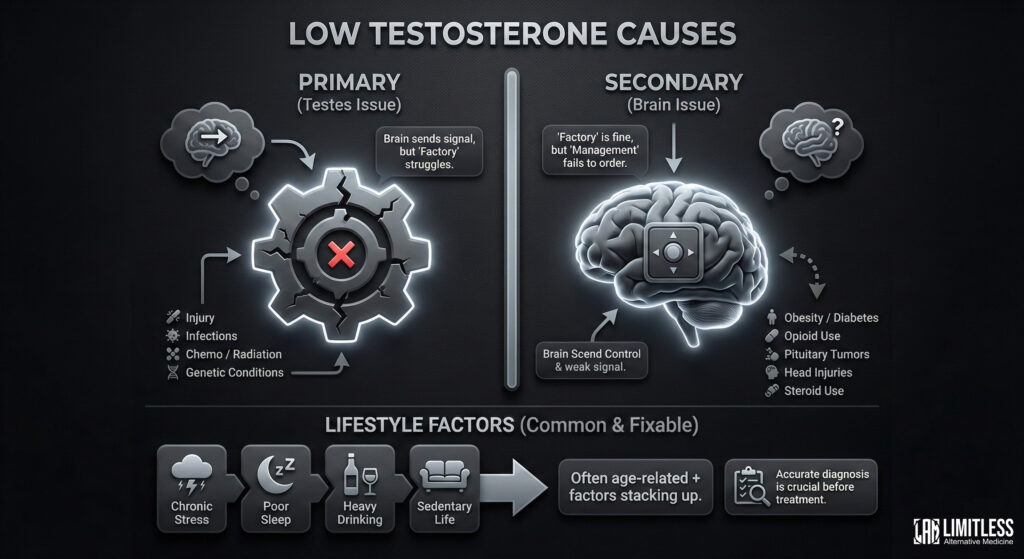
The causes break into two camps, and the distinction matters because it changes how your doctor approaches treatment.
Primary hypogonadism
This means the problem is in the testes themselves. The brain is sending the signal, “Hey, make testosterone”, but the factory is struggling. Causes include testicular injury, infections like mumps orchitis, chemotherapy, radiation, or genetic conditions like Klinefelter syndrome.
Secondary hypogonadism
Here the factory is fine, but the management office (the hypothalamus and pituitary gland in the brain) isn’t sending the right orders. This can result from obesity, type 2 diabetes, chronic opioid use, pituitary tumors, head injuries, or—and this is a common one—prolonged use of anabolic steroids, which essentially teaches your brain to stop asking for natural production.
And then there are the lifestyle factors, which are both the most common and the most fixable: chronic stress, poor sleep, heavy drinking, and sitting around all day. In a lot of cases, low T is some combination of natural age-related decline plus these contributing factors stacking up over time. Which is why a good diagnostic workup is essential before anyone hands you a prescription.
How to Get Tested and Diagnosed
This is the part where you actually do something instead of just reading about it on your phone at 11 PM, so pay attention.
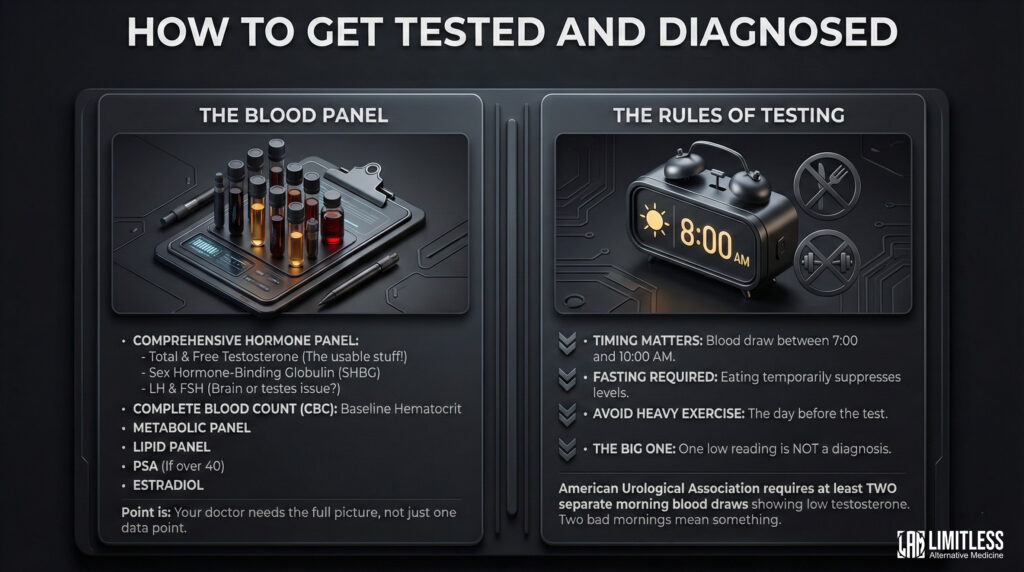
The Blood Panel
A responsible provider won’t just check your total testosterone and call it a day. You need a comprehensive hormone panel, which includes total testosterone, free testosterone (this is the stuff your body can actually use—total T includes testosterone that’s bound up and unavailable, like money in a retirement account you can’t touch), sex hormone-binding globulin (SHBG), LH and FSH (these tell your doctor whether the problem is in your brain or your testes), a complete blood count to establish your baseline hematocrit (this becomes important later), a metabolic panel, a lipid panel, PSA if you’re over 40, and estradiol.
That’s a lot of acronyms. The point is: your doctor needs the full picture, not just a single data point.
The Rules of Testing
Testosterone levels peak in the early morning and fluctuate throughout the day, which means timing matters. Blood should be drawn between 7:00 and 10:00 AM, fasting, because eating can temporarily suppress your levels. You should avoid heavy exercise the day before.
And here’s the big one: one low reading is not a diagnosis. The American Urological Association requires at least two separate morning blood draws showing low testosterone before confirming hypogonadism. One bad morning doesn’t mean you have a hormonal condition. Two bad mornings, on the other hand, starts to mean something.
Alright, so your labs came back low. Twice. Your symptoms check out. Now what?
The In-Person Route
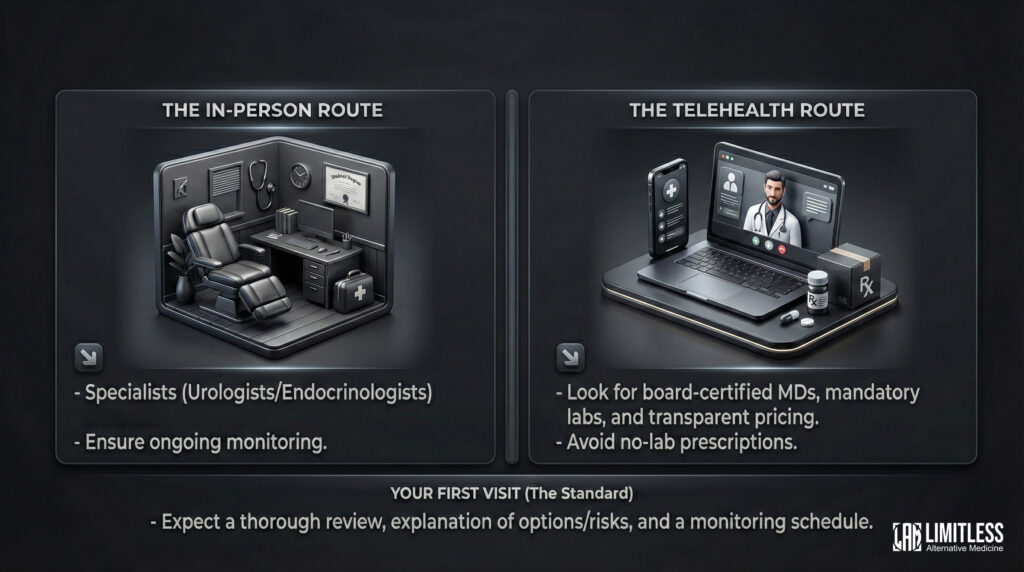
Urologists and endocrinologists are the specialists best equipped to manage TRT. Your primary care doctor can also prescribe it, though specialists tend to be more fluent in the nuances of dosing, monitoring, and the inevitable adjustments that come with dialing things in. The key thing to look for in any provider: do they monitor you after prescribing? A doctor who writes a script and sends you on your way is a doctor doing half the job.
The Telehealth Route
Online men’s health clinics have made TRT much more accessible, which is mostly good but also means you need to be discerning. The best ones handle lab orders, virtual consultations, prescriptions, and medication delivery in a streamlined package. The worst ones are basically prescription mills in a nice website’s clothing.
When evaluating a telehealth provider, here’s what to look for: board-certified physicians (not just nurse practitioners) making the prescribing decisions, mandatory lab work before they’ll prescribe anything, a commitment to follow-up blood work and ongoing monitoring, and transparent pricing. If a clinic is willing to prescribe testosterone to you without seeing lab results first, that is not a progressive clinic embracing modern medicine. That is a red flag.
Your First Visit
Whether you walk into an office or open a laptop, the first appointment should involve a thorough review of your symptoms, your medical history, your current medications, and your lab results. The provider should explain the different treatment options, walk through the risks and side effects without either minimizing or catastrophizing them, and set up a monitoring schedule. If any of that gets skipped, you’re at the wrong place.
How TRT Works: Methods, Dosing, and What to Expect
Now we get into the practical stuff. There are several ways to get testosterone into your body, and the best method depends on your lifestyle, your tolerance for needles, and how your body responds.
Administration Methods
Method
Frequency
Pros
Cons
Intramuscular Injections (Cypionate/Enanthate)
Every 1–2 weeks
Cheapest option, precise dosing, most clinical data
Self-injection, potential peaks and valleys
Subcutaneous Injections
2–3x per week
Tiny needle, more stable levels
More frequent injections
Topical Gels/Creams
Daily
Steady levels, no needles
Transfer risk to others, pricier
Pellets (Testopel)
Every 3–6 months
Set it and forget it
Minor surgical insertion, hard to adjust
Patches
Daily
Consistent delivery
Skin irritation, can peel off
Intramuscular injections of testosterone cypionate remain the most commonly prescribed method, mostly because they’re cheap, effective, and backed by decades of data. They’re the Toyota Camry of TRT delivery methods: not glamorous, totally reliable.
Typical Dosing
Most guys start on 100 to 200 mg of testosterone cypionate or enanthate per week, often split into two smaller injections (say, 80 mg Monday and 80 mg Thursday) rather than one big dose. Splitting the dose keeps your blood levels more stable, which means fewer side effects and less of that roller-coaster feeling where you feel great for three days and then like a wet blanket for four. Your provider will adjust based on follow-up labs, usually at the 6-week and 12-week marks.
When Will You Notice a Difference?
TRT is not a light switch. It’s more like a sunrise. Research published in the New England Journal of Medicine found: mood improvements tend to show up within 3 to 4 weeks—subtle at first, like you suddenly realize you didn’t need that third cup of coffee. Libido and sexual function typically improve within 3 to 6 weeks. Body composition changes—more muscle, less belly—take 3 to 6 months. Full bone density benefits take a year or two. The timeline depends on where you started, how consistent you are, and what else you’re doing (diet, exercise, sleep). TRT is not a substitute for those things. It’s the foundation that makes those things possible again.
This section is important and also, I’ll be honest, not the sexiest part of the guide. But it’s the part that separates responsible TRT from the kind of thing you look back on in five years and wince about.
The Follow-Up Schedule
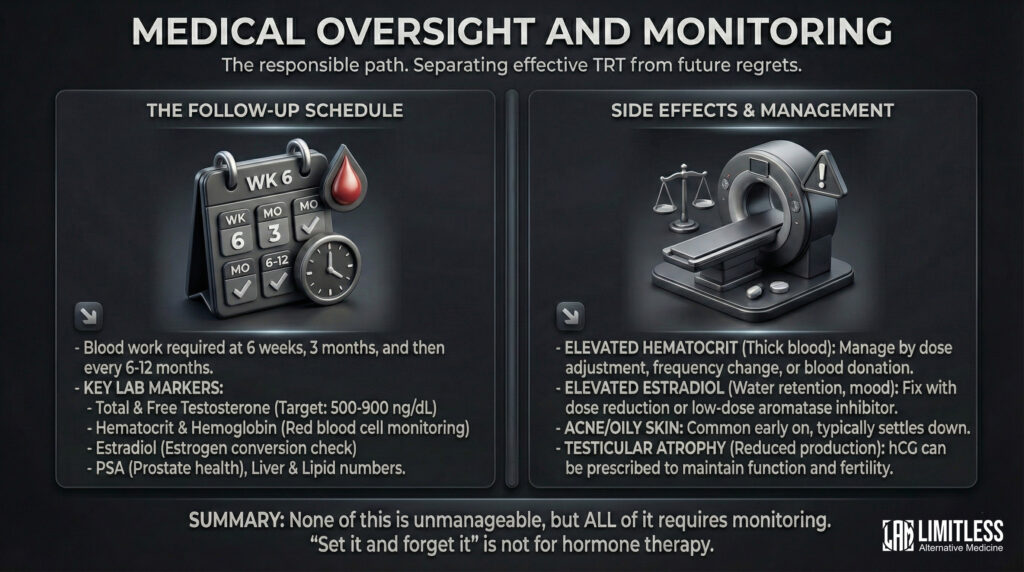
After starting TRT, you need blood work at 6 weeks (to check your initial response), at 3 months (for dose optimization), and then every 6 to 12 months for as long as you’re on therapy. According to The Endocrine Society’s clinical practice: total and free testosterone (aiming for 500 to 900 ng/dL, is the therapeutic sweet spot), hematocrit and hemoglobin (because testosterone stimulates red blood cell production, and too many red blood cells is a problem), estradiol (your body converts some testosterone to estrogen via a process called aromatization, and you need to keep that in check), PSA (prostate health), and your liver and lipid numbers.
Side Effects and What to Do About Them
Most TRT side effects are dose-dependent — meaning they’re usually fixable by adjusting the dose.
Elevated hematocrit (blood gets too thick) is the most common issue. Managed by tweaking the dose, injecting more frequently in smaller amounts, or donating blood.
Elevated estrogen can cause water retention, mood swings, or breast tissue tenderness. Usually resolves with a dose reduction or a low-dose aromatase inhibitor.
Acne and oily skin are common early on and typically settle down.
Testicular atrophy happens because when you supply testosterone externally, your body reduces its own production. If fertility is a concern, your provider can prescribe hCG alongside TRT.
None of this is unmanageable. But all of it requires monitoring.
What Does TRT Cost?
Let’s talk money, because this is always the question people are afraid to ask, so they just don’t, and then they’re surprised.
Method
Estimated Monthly Cost (Without Insurance)
Testosterone Cypionate (generic)
$30–$80
Topical Gel (AndroGel, Testim)
$200–$500
Compounding Pharmacy Cream
$50–$120
Pellets (Testopel)
$500–$1,000 per insertion (every 3–6 months)
Telehealth All-Inclusive
$150–$350
The most affordable route is generic testosterone cypionate picked up at your pharmacy with a GoodRx coupon. We’re talking under $30 for a vial that lasts two months. This is not an expensive medication. The expensive parts, if there are any, tend to be the telehealth subscriptions or the fancy delivery methods.
Insurance Coverage
Good news: many insurance plans cover TRT if you have a documented diagnosis of hypogonadism—meaning two blood tests confirming low testosterone plus clinical symptoms. That said, coverage varies wildly, so call your insurer and ask about formulary status for your specific medication, whether prior authorization is required, whether they cover monitoring labs, and whether they require step therapy (i.e., making you try the cheapest option before approving something else). Even with insurance, injectable testosterone is typically a low-cost generic, so your out-of-pocket is usually pretty modest.
When administered properly and monitored responsibly, TRT has been shown to improve energy levels and reduce that soul-crushing fatigue, restore a healthy sex drive and erectile function, increase lean muscle mass while reducing body fat, sharpen mood, motivation, and cognitive clarity, support bone mineral density, and improve certain markers of cardiovascular health (though the long-term cardiovascular picture is still being studied).
That’s a meaningful list. For a lot of men, TRT is the difference between going through the motions and actually being present in their own lives.
Who Should Not Do This
TRT is not for everyone. You should avoid it if you have a history of prostate or breast cancer, untreated severe obstructive sleep apnea, uncontrolled heart failure, The Endocrine Society recommends monitoring hematocrit at baseline, 3 to 6 months, then annually, with dose adjustment if it exceeds 54%., or if you are actively trying to have a baby (exogenous testosterone suppresses sperm production, sometimes dramatically).
One piece of good news on the risk front: the TRAVERSE trial, published in the New England Journal of Medicine in 2023 and one of the largest randomized controlled studies on TRT, found that testosterone therapy did not increase the risk of major cardiovascular events in men with hypogonadism who had preexisting cardiovascular risk. This was a significant finding that has meaningfully reshaped the risk-benefit conversation around TRT.
The Takeaway
TRT is a legitimate, evidence-based medical treatment for men with clinically confirmed low testosterone. It’s not a miracle, and it’s not a shortcut. It’s a correction—a way of giving your body back what it’s no longer making enough of on its own.
Getting properly diagnosed requires fasting morning blood work, done twice. Multiple delivery methods exist, with injectable testosterone cypionate being the most cost-effective and well-studied. Ongoing monitoring is essential. Costs are manageable. Both telehealth and in-person providers can prescribe TRT, but the quality of care varies enormously, so choose someone who treats follow-up labs as non-negotiable, not optional.
If any of this resonated—if you’ve been feeling off and you can’t quite put your finger on why—the first step is simple and costs you nothing but an early morning and a blood draw. Get your levels tested. Have the conversation. You’ve been running on whatever version of yourself this is for long enough. It’s worth finding out whether there’s a better one available.
1. Mulhall JP, Trost LW, Brannigan RE, et al. Evaluation and Management of Testosterone Deficiency: AUA Guideline. American Urological Association. 2018.
2. Bhasin S, Brito JP, Cunningham GR, et al. Testosterone Therapy in Men With Hypogonadism: An Endocrine Society Clinical Practice Guideline. J Clin Endocrinol Metab. 2018;103(5):1715–1744.
3. Lincoff AM, Bhasin S, Flevaris P, et al. Cardiovascular Safety of Testosterone-Replacement Therapy (TRAVERSE). N Engl J Med. 2023;389(2):107–117.
4. Snyder PJ, Bhasin S, Cunningham GR, et al. Effects of Testosterone Treatment in Older Men. N Engl J Med. 2016;374(7):611–624.
5. Corona G, Giagulli VA, Maseroli E, et al. Testosterone Supplementation and Health: A Systematic Review and Meta-Analysis. Lancet Diabetes Endocrinol. 2017.
Testosterone replacement therapy, or TRT, is known as a medical treatment involving using testosterone to treat low hormone levels in men. Due to aging, injury, or illness, TRT is often prescribed to men with low testosterone levels. One of the men’s most common questions about TRT is whether it is expensive. In this article, we will explore the cost of TRT and what factors can affect its price.
The Cost of Testosterone Replacement Therapy
The cost of TRT can vary depending on several factors, including the type of treatment, dosage, and duration. On average, the cost of TRT can range from $50 to $500 per month. The cost of injections can be higher than other forms of TRT, such as gels or patches. However, injections may be more effective for some men.
Why the Cost is so High?
TRT therapy can be expensive, and there are several reasons why. First, the actual medications used for treatment can be costly. Blood tests and monitoring appointments may also be required for proper dosing, which can add to the total cost. Also, some insurance companies may not cover the total cost of treatment, meaning that you will have to cover the remaining out-of-pocket.
Another factor is the cost of ancillary treatments that may be necessary to treat other conditions associated with low testosterone levels. These treatments include hormone replacement therapy, lifestyle modifications, and dietary supplements. While these treatments are often beneficial, they also come with their costs.
Finally, the cost of testosterone replacement therapy may be higher depending on the individual’s health plan. For example, if the program has a high deductible or does not cover hormone treatments, the cost of treatment can be much more expensive.
How to Manage the Cost?
If you’re considering testosterone replacement therapy, the cost can be one of the most perplexing parts of the decision. Fortunately, there are ways to manage the cost of testosterone replacement therapy.
First, talk to your doctor about which treatment is proper for you and the associated costs. Several types of testosterone replacement therapy exist, such as gels, patches, pills, and injections. Depending on which method you choose, the price can vary significantly.
Next, ask your doctor if they have any discounts or special offers available. Many doctors offer reduced rates for specific treatments or medications. It never hurts to ask, and could save you money in the long run.
If you don’t have insurance coverage for testosterone replacement therapy, you may be able to find discounts through your pharmacy or by looking for coupons online. You may also get discounted medications through a charity or patient assistance program.
Finally, consider taking advantage of tax credits or deductions for medical expenses. This could help reduce the money you need to spend on testosterone replacement therapy.
By following these tips, you can make testosterone replacement therapy more affordable. Talk to your doctor and research how to manage the cost of this vital treatment.
Factors That Affect the Cost of Testosterone Replacement Therapy
Several factors can affect the cost of TRT. One of the most noteworthy factors is the type of treatment. Injections are more expensive than other forms of TRT, such as gels or patches.
Additionally, the dosage and duration of treatment can also affect the cost. Higher dosages and more extended treatment periods can increase the overall cost of TRT.
Another issue that can affect the price of TRT is insurance coverage. A few insurance plans may cover the cost of TRT, while others may not. It is essential to check with your insurance provider to determine what your coverage options are. If your insurance does not cover TRT, you may need to pay for the treatment out of pocket.
Is Testosterone Replacement Therapy Worth the Cost?
The decision to undergo TRT should be based on various factors, including your overall health, lifestyle, and personal preferences. While TRT can be expensive, it may be worth the cost for some men. Patients have experienced satisfaction and security through this program. However, discussing TRT’s potential benefits and risks with your healthcare provider before starting treatment is essential. In conclusion, the cost of TRT can vary depending on factors, including the type of treatment, dosage, and duration. While TRT can be expensive, it may be worth the cost for some men. It is essential to discuss the potential benefits and risks of TRT with your healthcare provider before starting treatment. Additionally, checking with your insurance provider can help determine what coverage options are available to you.
FAQs
What Is TRT?
TRT is a medical treatment that involves the administration of testosterone to men whose bodies are not producing enough of the hormone. It can be administered in various forms, such as injections, patches, gels, and pellets. TRT aims to restore testosterone levels to a normal range and alleviate symptoms associated with low testosterone.
Who Is A Good Candidate For TRT?
Men diagnosed with low testosterone levels and experiencing symptoms such as fatigue decreased sex drive, and depression may be good candidates for TRT. However, TRT is not recommended for men with prostate or breast cancer or a history of blood clots. It is essential to check with a healthcare provider to determine if TRT is right for you.
What Are The Potential Side Effects Of TRT?
Like any medical treatment, TRT comes with potential side effects. Some side effects include acne, fluid retention, and breast enlargement. More severe side effects include an increased risk of blood clots, sleep apnea, and prostate enlargement. It is essential to discuss the potential risks and benefits of TRT with a healthcare provider before starting treatment.
How Long Does It Take For TRT To Work?
The time it takes for TRT to work varies from person to person. Some men may start to see improvements in their symptoms within a few weeks, while others may take several months. It is important to have regular follow-up appointments with a healthcare provider to monitor testosterone levels and adjust the treatment plan if necessary. In conclusion, TRT can be an effective treatment option for men with low testosterone levels. However, it is important to consult a healthcare provider to determine if TRT is right for you and to discuss potential risks and benefits. Regular follow-up appointments are also important to monitor testosterone levels and adjust the treatment plan if necessary.
TLDR: So testosterone drops, and suddenly everything’s harder. You’re tired. Your brain’s foggy. There’s this little belly situation developing. You’re cranky for no reason. Sex? Not so much. Could be age, could be illness, could be stress, could be you’re just living your life wrong. Blood test figures it out. Fix it with hormone therapy or change how you’re living. Catch it early, feel better. That’s the deal.
What’s Actually Happening (And Why You Feel Like Garbage)
Here’s the thing about testosterone, it’s not just one thing. It’s everything. Energy. Mood. Whether your muscles work the way they used to. Whether you want to have sex or would rather just go to bed. With a book. Alone.
When it drops, and it will drop for everyone, you don’t always notice. Sometimes, it falls faster and harder than expected. Not right away. It’s subtle. Insidious, even. Like, you wake up one Tuesday and your coffee tastes fine but doesn’t do anything. You’re at the gym doing the same workout you did six months ago and the weights feel heavier. Not impossible. Just heavier. And you think: Huh.
Or you’re sitting at your desk and someone asks you a simple question—Where did you put that report? What time is the meeting?—and your brain just… stalls. Like it’s buffering. And you think: Huh.
You don’t think “testosterone.” You think: I’m tired. I’m stressed. I’m getting old. I should sleep more. Drink less. Something.
But sometimes it’s not something. Sometimes, your body’s fuel gauge runs low. You might not notice until you’re running on fumes.
Why This Matters (Even Though You’d Rather It Didn’t)
Look, nobody wants to think about their hormones. Hormones are embarrassing. They’re messy. They’re what you learn about in middle school health class. They spark those awkward talks you’d rather avoid.
But low testosterone doesn’t care about your preferences.
It makes you tired in a way that sleep doesn’t fix. Your muscles get smaller even when you’re lifting. Your waistline expands even when you’re eating the same stuff you always ate. You snap at your kids, your partner, the guy who cut you off in traffic—and you don’t even know why. You just feel… irritated. By everything. All the time.
And the sex thing. Obviously the sex thing. Less interest. Fewer spontaneous moments. Fewer morning situations. You start making excuses—too tired, too stressed, too much on your mind. And maybe that’s true. Or maybe it’s not.
None of it feels like a crisis. That’s the problem. It’s a slow build of little annoyances. One day, you notice life feels heavier, duller, and grayer than before.
How Common Is This? (Spoiler: Very)
About one in four guys over sixty. But plenty of younger guys as well. Chronic illness. Medications, opioids, steroids, others. Terrible sleep. High stress. Carrying extra weight. All of it chips away at your testosterone like water eroding stone. Slowly. Quietly. Until one day there’s a canyon where there used to be solid ground.
So if you’re feeling this way, congrats, you’re part of a very large, very tired club.
The Early Signs (That You’ll Probably Ignore)
Fatigue. But like, persistent fatigue. The kind where you sleep eight hours and wake up feeling like you slept four.
Mood problems. You’re irritable. Short-tempered. Everything annoys you and you can’t quite explain why.
Brain fog. Words don’t come as easily. You forget things. Simple things. Where you put your phone. What you were about to say. Why you walked into this room.
And then sex. Less interest. Fewer erections, especially the morning ones that used to happen on their own. Trouble getting hard. Trouble staying hard.
For younger guys, teenagers, low testosterone looks different. Delayed puberty. Slower growth. Smaller testicles. That’s harder to miss, thank God.
What It Feels Like (Two Guys, Same Problem)
Dave’s forty-eight. Lifts weights. Eats okay. Not great, but okay. Lately his bench press won’t budge. He’s stuck. His stomach is getting soft. This is strange since he’s eating the same as last year.
Then he notices he’s crankier than usual. Forgets where he put his keys. His wallet. His patience. Coffee used to help, now it’s just brown water that does nothing.
One morning he mentions it to his doctor, almost as an afterthought. Blood work comes back. Low testosterone. Everything clicks into place. Oh. That’s what that was.
Or Mark, fifty-two. His energy’s gone. His sex drive’s gone. His belt doesn’t fit. He blames stress, because what else would it be?
His doctor runs tests. Low testosterone. Now he’s adjusting things—less beer, more sleep, keeping track of his levels. Trying to claw his way back to feeling normal.
Symptoms and Causes
Category
Symptoms
Causes
Physical
Fatigue, weak muscles, more belly fat, fragile bones
Age, illness, testicular issues, obesity, chemo
Sexual
Low libido, erectile problems, infertility
Hormonal imbalance, medications, pituitary issues
Mental
Brain fog, irritability, low mood
Stress, metabolic problems, hormonal issues
Young males
Delayed puberty, slow growth
Genetic conditions, pituitary or hypothalamus problems
Why This Happens (The Actual Science Part)
Three main reasons:
Your testicles aren’t making enough. This is primary hypogonadism, which sounds bad because it is bad. Could be genetic, Klinefelter syndrome, for instance. Could be injury, infection, chemotherapy, radiation. Sometimes your testicles just… can’t.
Your brain isn’t sending the right signals. Secondary hypogonadism. Your pituitary gland or hypothalamus tells your testicles what to do. If they aren’t working, your testicles won’t function properly. Obesity can cause this. Metabolic syndrome. Chronic illness. Certain medications.
Life. You’re not sleeping. You’re stressed. You drink too much. You don’t move enough. You’re getting older. All of this, individually or in combination, drags your testosterone down. Slowly. Over years. Until one day you’re middle-aged and exhausted and wondering how you got here.
Early Warning vs. Serious Symptoms
Stage
Symptoms
What it Means
Early
Mild fatigue, low libido, occasional fog, less motivation
Time to check in with a doctor and lifestyle tweaks
You go to your doctor. You say: I’m tired all the time. My sex drive’s gone. I’m moody. I’m losing muscle.
They order blood tests. Usually in the morning, when testosterone peaks. They check total testosterone and free testosterone. Sometimes, they also test LH and FSH. This helps them determine if the issue is with the testicles or the brain. Maybe they check other hormones too.
One test isn’t enough, though. Your levels fluctuate. Day to day, hour to hour. So they’ll test you a couple times to make sure.
It’s not dramatic. It’s just data. Numbers on a page that explain why you feel the way you feel.
How to Fix It
Testosterone Replacement Therapy
TRT brings your levels back up. Helps with energy, mood, sex. You’ve got options:
Injections. Every week or two.
Gels or creams. Daily application.
Patches or pellets. Slow release over time.
Your doctor monitors your blood levels. Makes sure it’s working. Watch for side effects. These include acne, hair loss, and fluid retention. You might also see a higher red blood cell count and fertility issues.
Lifestyle Changes
Even on TRT, you still have to do the work. Lift weights. Move your body. Eat real food. Sleep. Manage your stress. None of this is magic. But it helps. More than you’d think.
Living With Low Testosterone (The Long Game)
Low testosterone changes your daily life. You plan around your energy. You pay attention to your mood. You notice when sex feels different.
With treatment and some adjustments to how you live, most guys get a lot of it back. Energy. Strength. Focus. But it requires attention. Regular doctor visits. Blood tests. Monitoring.
It becomes part of your routine. Like brushing your teeth or checking your oil. Annoying, maybe. But necessary.
Questions People Actually Ask
What’s the first sign? Usually fatigue. Or low libido. Or mood changes. Something subtle you might ignore.
Can it cause depression? Yeah. Irritability and low mood come with the territory.
How fast does TRT work? Libido and mood might improve in a few weeks. Muscle and strength take months.
Can you fix it naturally? Exercise helps. Sleep helps. Losing weight helps. But it’s modest. Don’t expect miracles.
Is it permanent? Depends. Age-related decline doesn’t reverse. Some medical causes do.
Does stress lower testosterone? Chronic stress absolutely does.
What about fertility? TRT can lower sperm production. If you want kids, talk to your doctor first.
The End (Sort Of)
Low testosterone sneaks up on you. You blame stress. You blame age. You blame your job, your life, your choices.
And maybe those things are part of it. But sometimes it’s just your body running low on something it needs. And once you know that, you can do something about it.
Pay attention to the small stuff. The fatigue. The brain fog. The sex drive that’s not what it used to be. Get tested. Get treated. Adjust your life.
Because the alternative—just accepting that this is how things are now—doesn’t have to be the answer.
STILL HAVE QUESTIONS?
Don’t hesitate to ask us! Our knowledgeable team is here to provide the answers you need. Feel free to reach out to us at anytime.
We use cookies to ensure that we give you the best experience on our website. If you continue to use this site we will assume that you are happy with it.