


Normal Adult Male Total Testosterone Reference Ranges
| Age Group | Range (ng/dL) | Source | Notes |
|---|---|---|---|
| 19-39 years (non-obese) | 264-916 | Endocrine Society / Journal of Clinical Endocrinology & Metabolism (2017) | Harmonized reference range from 4 cohort studies (9,000+ men). Gold standard research. |
| 19+ years (general) | 300-1,000 | Baptist Health / American Urological Association | Widely cited clinical guideline |
| 19-49 years | 249-836 | University of Iowa Healthcare Laboratory | Clinical laboratory reference |
| 50+ years | 193-740 | University of Iowa Healthcare Laboratory | Clinical laboratory reference |
| 20-24 years | 409-558 (middle tertile) | Journal of Urology / NHANES Study (2022) | Age-specific normative values from National Health and Nutrition Examination Survey |
| 25-29 years | 413-575 (middle tertile) | Journal of Urology / NHANES Study (2022) | Age-specific normative values |
| 30-34 years | 359-498 (middle tertile) | Journal of Urology / NHANES Study (2022) | Age-specific normative values |
| 35-39 years | 352-478 (middle tertile) | Journal of Urology / NHANES Study (2022) | Age-specific normative values |
| 40-44 years | 350-473 (middle tertile) | Journal of Urology / NHANES Study (2022) | Age-specific normative values |
| 40-49 years | 252-916 | LabCorp Research Study | Age-adjusted reference range |
| 50-59 years | 215-878 | LabCorp Research Study | Age-adjusted reference range |
| 60-69 years | 196-859 | LabCorp Research Study | Age-adjusted reference range |
| 70-79 years | 156-819 | LabCorp Research Study | Age-adjusted reference range |
Adult Female Total Testosterone Reference Ranges
| Life Stage/Age | Range (ng/dL) | Source | Notes |
|---|---|---|---|
| Premenopausal (General) | 10-55 | LabCorp / Healthline | Most commonly cited clinical range |
| Premenopausal (18+ years) | 8-48 | University of Iowa Healthcare | Clinical laboratory reference |
| Premenopausal (20s-40s) | 15-70 | North Pointe OB/GYN / SingleCare | Clinical practice range |
| Premenopausal (Age 30) | 15-46 | Journal of Clinical Endocrinology & Metabolism (2011) | Research study of 161 healthy cycling women |
| Premenopausal (Peak, 20s-early 30s) | 10-55 | Wisp / Clinical Guidelines | When levels are typically highest |
| Postmenopausal (General) | 7-40 | Healthline / AUA | Most commonly cited range |
| Postmenopausal (50+ years) | 2-41 | University of Iowa Healthcare | Clinical laboratory reference |
| Postmenopausal | 5-25 | North Pointe OB/GYN | Clinical practice range (narrower) |
| Ages 20-80 (full spectrum) | 10-57 (converted from 0.35-1.97 nmol/L) | Journal of Clinical Endocrinology & Metabolism (2012) | Mass spectrometry study, 985 women |
What matters most
- Under 300 ng/dL in men is often considered low
- Levels slowly drop about 1 percent per year after 30
- Test in the morning
- Repeat low results before worrying
- Symptoms matter as much as the number
- Sleep, lifting weights, and losing excess fat often fix borderline cases
If you want the details behind those numbers, keep reading!
Most people don’t think about testosterone until something feels off.
Energy drops. Workouts feel harder. Sex drive fades. Mood feels flat. Recovery slows down.
Then comes the search for answers.
You look up your lab result and wonder what “normal” even means.
The problem is that most articles either sound like a medical textbook or like a supplement ad. Neither is helpful.
So let’s keep this simple and practical.

What is testosterone?
Testosterone is a hormone your body makes naturally.
Men produce most of it in the testes. Women make smaller amounts in the ovaries and adrenal glands.
Even though it gets labeled the “male hormone,” both men and women need it.
It helps regulate:
- Muscle mass
- Strength
- Energy
- Sex drive
- Mood
- Bone density
- Red blood cell production
- Focus and motivation
Think of testosterone like a support hormone. It helps many systems work the way they should.
When levels drop too low or rise too high, things start to feel different.
Testosterone levels by age
The first thing people ask is simple.
“What number should I have?”
The answer depends on your age.
Testosterone peaks in early adulthood and then slowly declines. That decline is normal and expected.
Here are the typical ranges.
Normal testosterone levels in men
| Age | Range (ng/dL) |
|---|---|
| 20 to 29 | 300 to 1,000 |
| 30 to 39 | 300 to 950 |
| 40 to 49 | 300 to 900 |
| 50 to 59 | 300 to 850 |
| 60+ | 250 to 800 |
Most labs flag anything under 300 as low.
But this is important. A range is not a diagnosis. It is just a reference.
Two men can both sit at 320. One feels great. The other feels exhausted.
Numbers help. How you feel matters too.
Normal testosterone levels in women
| Group | Range (ng/dL) |
|---|---|
| Adult women | 15 to 70 |
| After menopause | 3 to 41 |
Women operate within a much smaller range. Small shifts can have noticeable effects.
How testosterone changes throughout life
Looking at the whole timeline helps things make more sense.
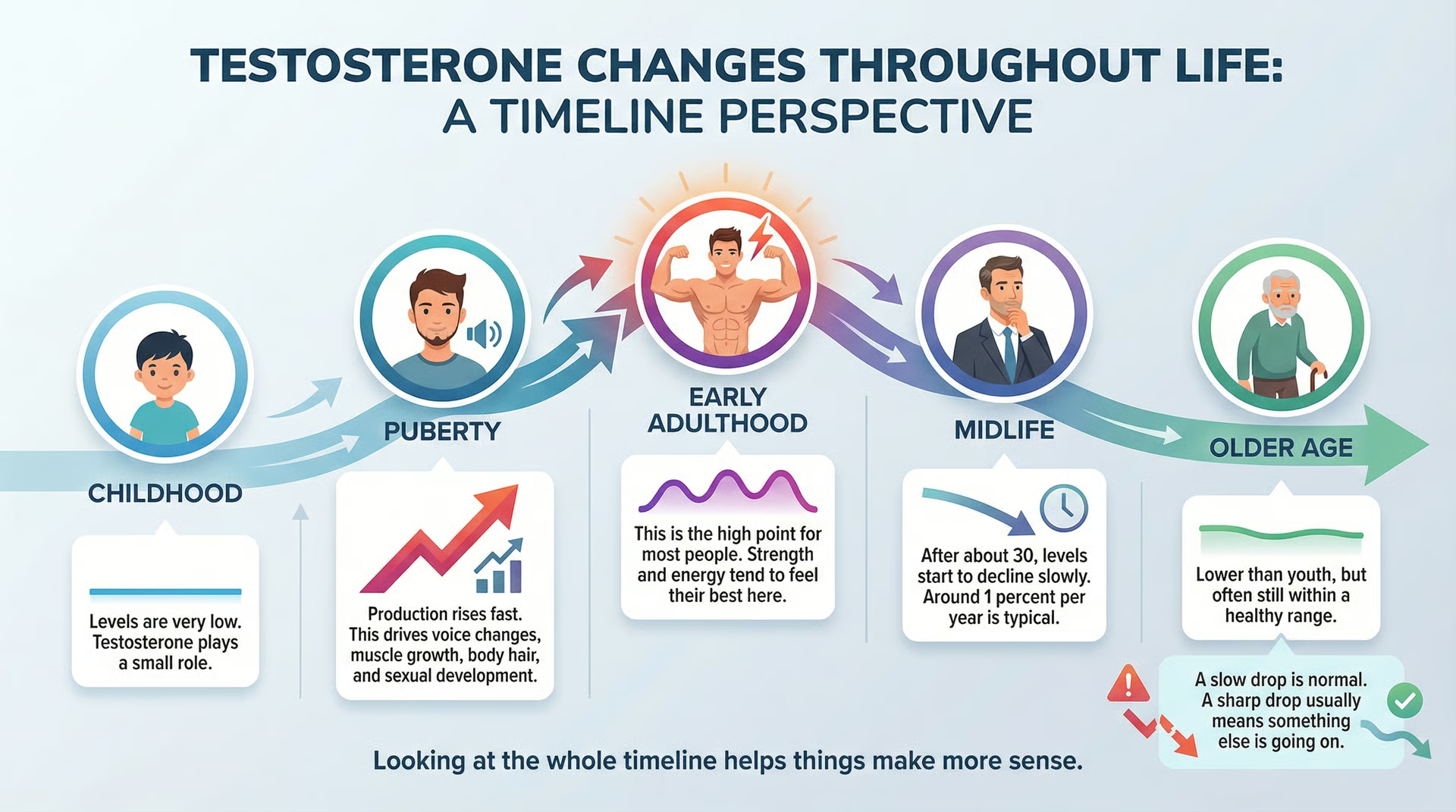
Childhood
Levels are very low. Testosterone plays a small role.
Puberty
Production rises fast. This drives voice changes, muscle growth, body hair, and sexual development.
Early adulthood
This is the high point for most people. Strength and energy tend to feel their best here.
Midlife
After about 30, levels start to decline slowly. Around 1 percent per year is typical.
Older age
Lower than youth, but often still within a healthy range.
A slow drop is normal. A sharp drop usually means something else is going on.
Why testosterone drops faster for some people
Age explains part of the story. Lifestyle explains the rest.
Here are the common causes that push levels down more than they should.
Poor sleep
Testosterone is made during sleep. If you cut sleep short, production falls.
Even a week of bad sleep can lower levels.
Extra body fat
Fat tissue converts testosterone into estrogen. More fat means less available testosterone.
High stress
Chronic stress raises cortisol. High cortisol suppresses testosterone.
Heavy drinking
Alcohol interferes with hormone production.
Illness or medications
Diabetes, thyroid issues, opioid medications, and some antidepressants can affect levels.
Sitting all day
Muscle activity helps signal hormone production. Inactivity does not.
In short, age sets the baseline. Daily habits determine where you land within that range.
Total vs free testosterone
This part confuses a lot of people.
Most lab tests show “total testosterone.”
But not all of that is usable.
Some testosterone is attached to proteins. That portion is not active.
Only a small amount is “free” and ready for your body to use.
So you can have a normal total number but still feel low if free testosterone is reduced.
If you’re testing, ask for:
- Total testosterone
- Free testosterone
- SHBG
These together give a clearer picture.
Symptoms of low testosterone
A single number rarely tells the full story.
Symptoms often show up first.
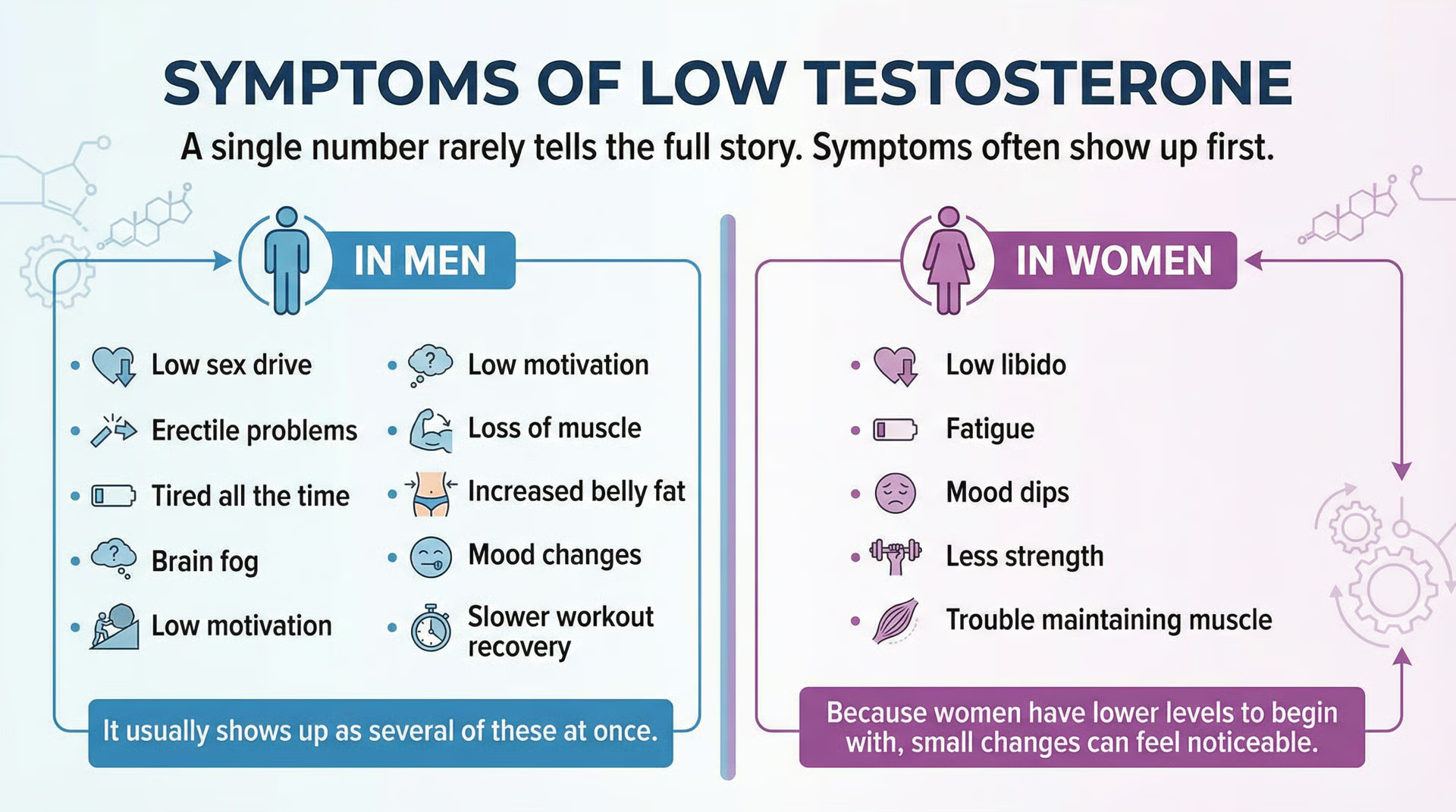
In men
Common signs include:
- Low sex drive
- Erectile problems
- Tired all the time
- Brain fog
- Low motivation
- Loss of muscle
- Increased belly fat
- Mood changes
- Slower workout recovery
It usually shows up as several of these at once.
In women
Symptoms can include:
- Low libido
- Fatigue
- Mood dips
- Less strength
- Trouble maintaining muscle
Because women have lower levels to begin with, small changes can feel noticeable.
Symptoms of high testosterone
High levels are less common without medication or supplements, but they can happen.
In men
- Acne
- Irritability
- Sleep problems
- Fertility issues
In women
- Facial hair growth
- Irregular periods
- Acne
- Voice changes
Very high numbers usually point to outside hormones or certain medical conditions.
How to test your testosterone correctly
Testing mistakes cause a lot of unnecessary stress.
Here’s how to do it right.
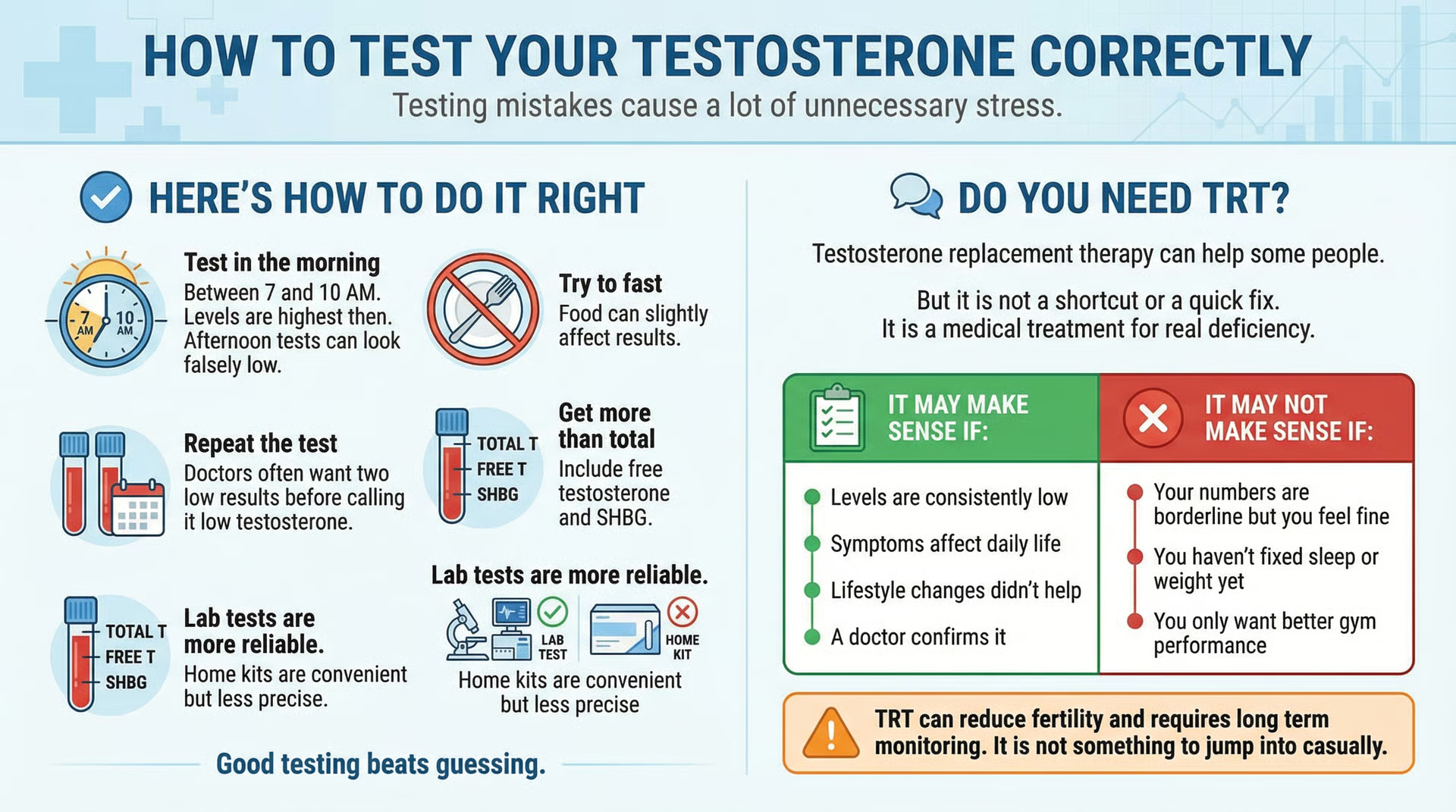
Test in the morning
Between 7 and 10 AM. Levels are highest then. Afternoon tests can look falsely low.
Try to fast
Food can slightly affect results.
Repeat the test
Doctors often want two low results before calling it low testosterone.
Get more than total
Include free testosterone and SHBG.
Lab tests are more reliable
Home kits are convenient but less precise.
Good testing beats guessing.
Do you need TRT?
Testosterone replacement therapy can help some people.
But it is not a shortcut or a quick fix.
It is a medical treatment for real deficiency.
It may make sense if:
- Levels are consistently low
- Symptoms affect daily life
- Lifestyle changes didn’t help
- A doctor confirms it
It may not make sense if:
- Your numbers are borderline but you feel fine
- You haven’t fixed sleep or weight yet
- You only want better gym performance
TRT can reduce fertility and requires long term monitoring. It is not something to jump into casually.
How to support healthy testosterone naturally
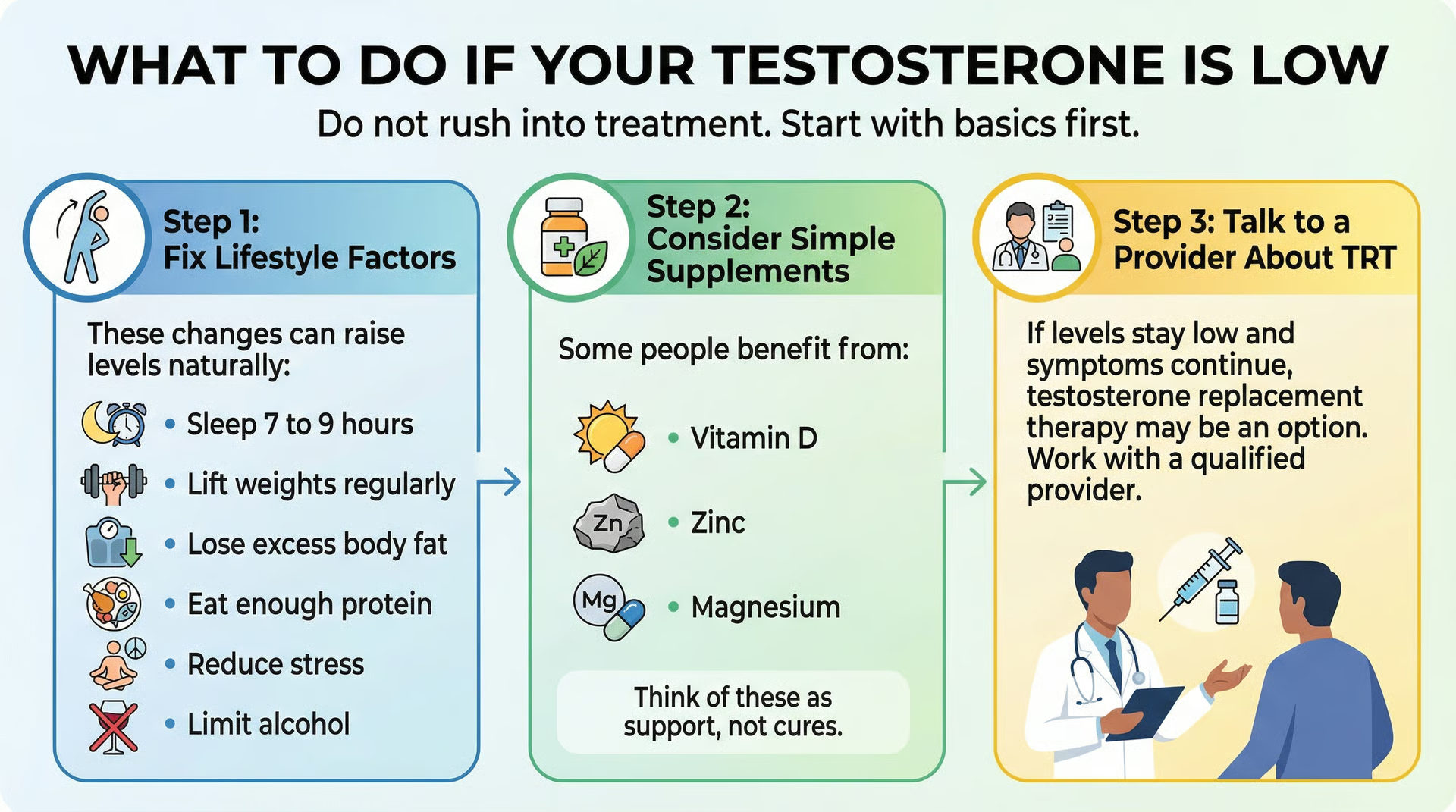
Most people see improvement by fixing basic habits.
Nothing complicated. Just consistent.
Sleep
Seven to nine hours every night.
Lift weights
Strength training two to four times per week.
Lose excess fat
Even small weight loss can help.
Eat enough protein and healthy fats
Hormones need raw materials.
Get sunlight or vitamin D
Low vitamin D often lines up with low testosterone.
Manage stress
Daily stress management matters more than you think.
Limit alcohol
Moderation helps protect hormone levels.
These steps will not double your testosterone overnight. But they often move people from borderline to normal.
Frequently asked questions
Is 300 testosterone low?
Borderline. Some people feel fine there. Others feel symptoms.
What time is best to test?
Morning.
How fast does testosterone decline?
About 1 percent per year after age 30.
Can women have low testosterone?
Yes. It can affect energy and libido.
Should I focus on numbers or symptoms?
Both together.
When to see a doctor
Talk with a professional if you notice:
- Ongoing fatigue
- Sexual problems
- Mood changes
- Muscle loss
- Abnormal lab results
Hormones affect many systems. Getting proper testing is better than guessing.
If you would like to get your testing done. Consider Limitless Alternative Medicine. A Professional, thorough and cost-effective choice. Start today.
Key takeaways
Testosterone is not mysterious.
It rises when you are young. It slowly drops with age. That is normal.
Healthy ranges are broad:
Men: roughly 300 to 1,000 ng/dL
Women: roughly 15 to 70 ng/dL
Most people do not need medication. They need better sleep, regular strength training, stress control, and accurate testing.
Start with those basics.
If problems remain, then talk with a doctor.
Simple habits solve more than most people expect.
Sources:
- Travison et al. (2017) – “Harmonized Reference Ranges for Circulating Testosterone Levels in Men of Four Cohort Studies in the United States and Europe” – Journal of Clinical Endocrinology & Metabolism, 102(4):1161-1173
- Mulhall et al. (2022) – “What Is a Normal Testosterone Level for Young Men? Rethinking the 300 ng/dL Cutoff for Testosterone Deficiency in Men 20-44 Years Old” – Journal of Urology
- American Urological Association (2018) – Evaluation and Management of Testosterone Deficiency Clinical Guideline
- LabCorp (2017) – Testosterone Reference Interval Changes Documentation
- University of Iowa Healthcare – Clinical Laboratory Reference Ranges
- Baptist Health – Normal Testosterone Levels by Age (2025)
- CDC Hormone Standardization (HoSt) Program – Laboratory standardization for testosterone measurements